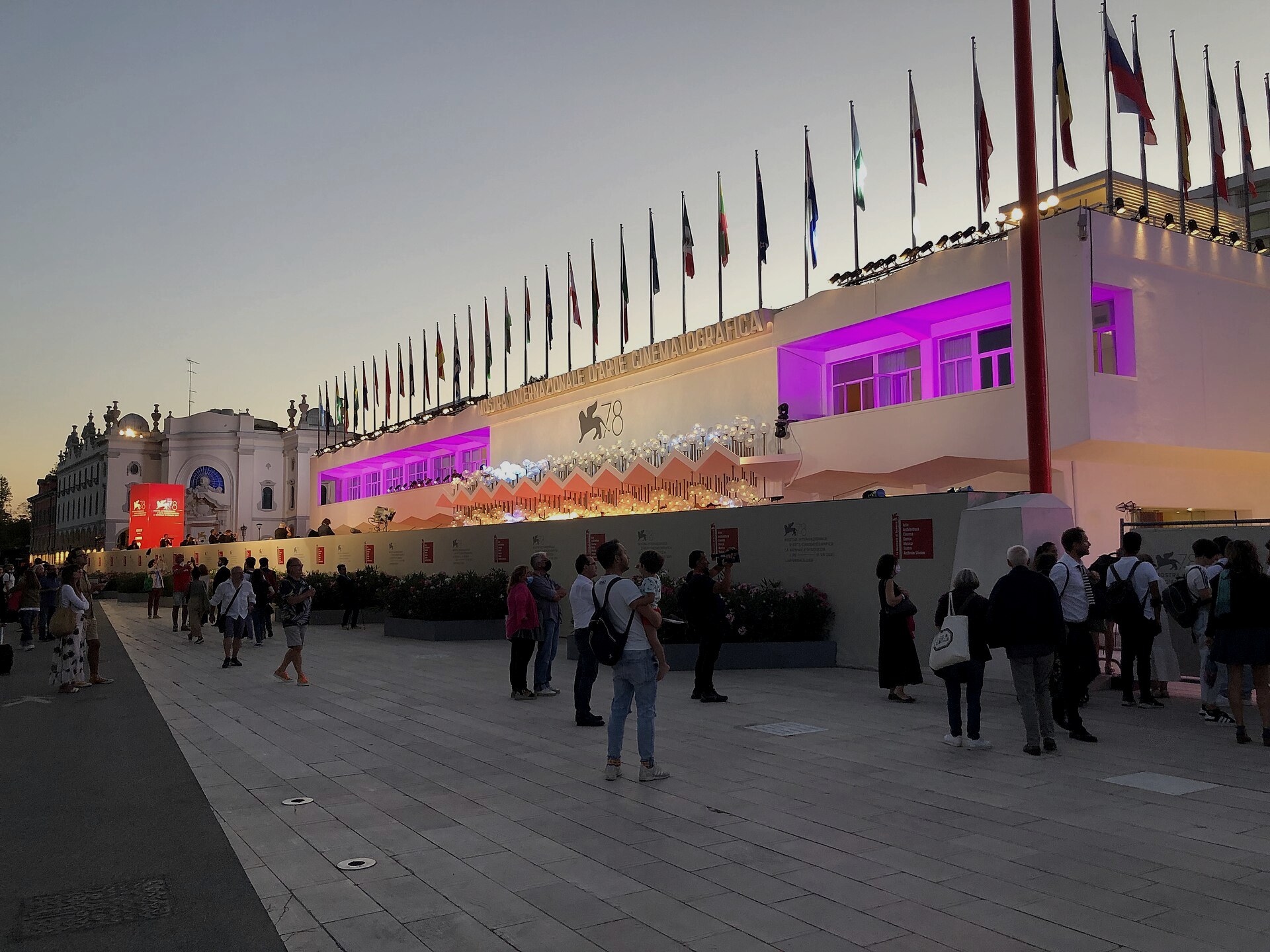
Here's what happened on the Lido. Danny Boyle's Ink opened the 83rd Venice Film Festival on Wednesday 2 September 2026, and the Sala Grande did not treat it like a polite first night. Deadline clocked a standing ovation of about five minutes. Variety put it closer to four and a half. Either way, Jack O'Connell, Guy Pearce, Claire Foy and Boyle stood through it while the room kept going.
You might have missed this part if you only saw the red carpet clips. Ink is not a tattoo movie. Boyle joked about that exact confusion at the morning press conference: you say you're making a film called Ink, he said, and people ask if it's about tattoos. It is about a newspaper. Specifically, it is about how Rupert Murdoch bought a failing British daily called The Sun in 1969, hired Yorkshire editor Larry Lamb, and helped turn a low-circulation broadsheet into the country's bestselling tabloid.
The short version is this. The picture runs 116 minutes. James Graham adapted it from his own 2017 stage play. It is in competition for the Golden Lion. Netflix has the United States and Latin America. StudioCanal has the rest of a long theatrical list. US cinemas get it on 11 December 2026. Netflix in the US and Latin America gets it on 8 January 2027. StudioCanal puts it into UK theatres the same January day. That is the release book as of Venice week.
This desk is reviews. So let's talk about the object on screen, not the brand argument that will follow it around for months. Guy Lodge at Variety called it gripping and sizzling — a propulsive, can't-look-away account of Lamb's career zenith, shot and cut with maximum flash. David Rooney at The Hollywood Reporter called it vigorously entertaining, a chronicle more than a critique. Rory O'Connor at The Film Stage called it a rip-roaring look at the rise of sensationalism and, bluntly, a good time at the movies. Nicholas Barber at BBC Culture called it Boyle's most Trainspotting-like film since Trainspotting.
On Rotten Tomatoes, as of the Venice openers, 89 percent of 19 critics' reviews were positive, with an average rating of 6.9 out of 10. Metacritic had it at 81 out of 100 from 13 critics. Those are early festival numbers. They will move. They are still the first public scoreboard the picture has.
What is the film actually doing for those 116 minutes? It starts in 1969. Pearce plays a young Murdoch who has already made his mark in Australia and has just taken control of The Sun. O'Connell plays Lamb, a working-class northern editor Murdoch poaches to reinvent the paper. Foy plays Jules Davies, a reporter and Lamb's mistress — a composite character, Wikipedia and the production notes both say, built from female reporters on Fleet Street at the time. Bertie Carvel, who won an Olivier and a Tony playing Murdoch in the stage version, turns up here as Hugh Cudlipp, the Mirror grandee who once employed Lamb.
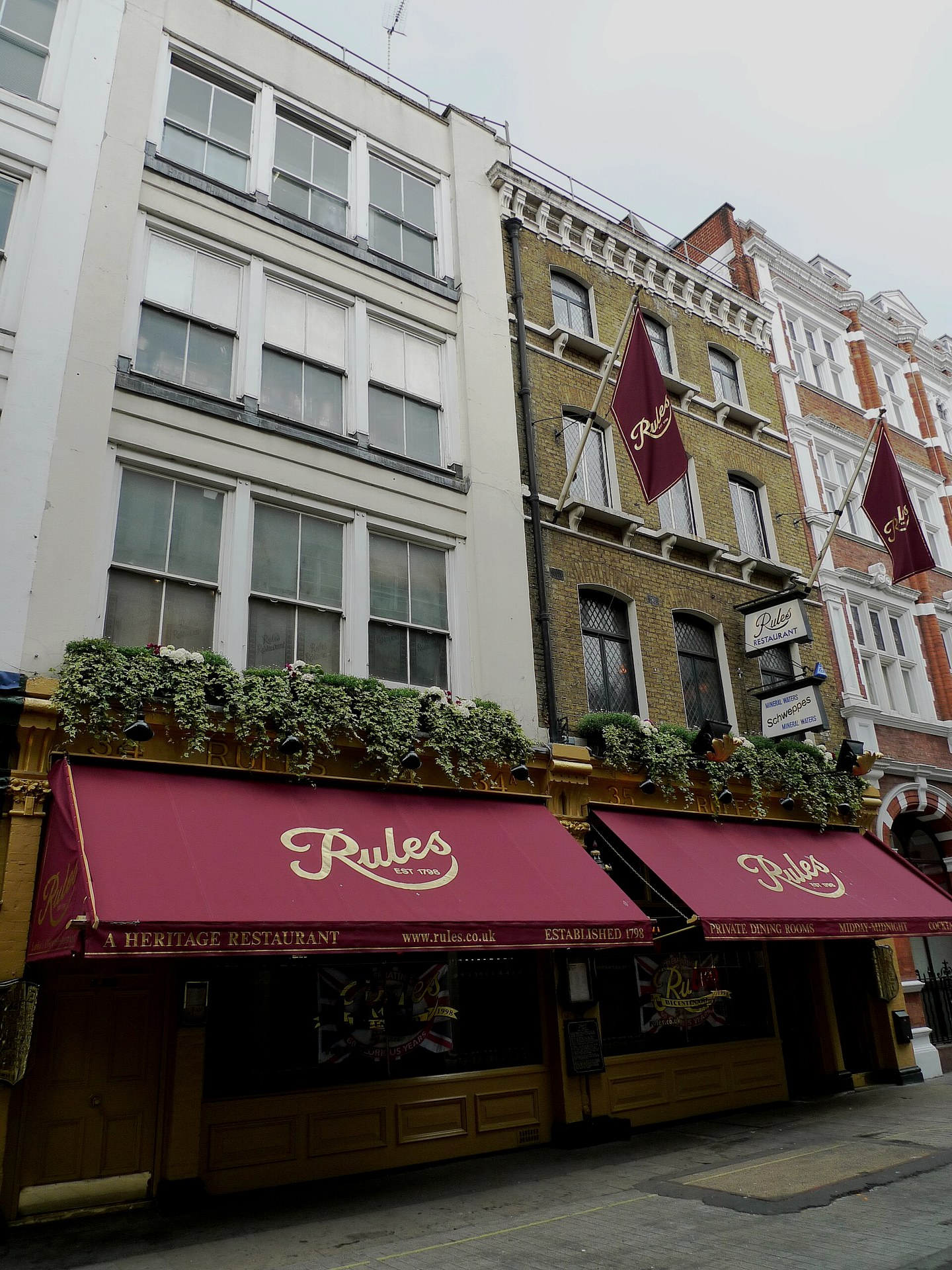
The opening move is a lunch at Rules, the Covent Garden restaurant that has been feeding London since the eighteenth century. Murdoch makes the pitch. Salary. Company car. A blanker canvas than Lamb will get anywhere else. Boyle does not let that scene sit still. Alwin H. Küchler's camera darts and zooms. Fin Oates cuts inside the conversation. The sound floor — Johnnie Burn and Daniel Pemberton working together — puts industrial churn under the dialogue. Lodge flagged the selective allegiance to fact in that setup: the film pulls Lamb from the Daily Mirror; historically Lamb's path also ran through the Daily Mail. The movie is not a documentary. It is a Boyle picture wearing newsprint.
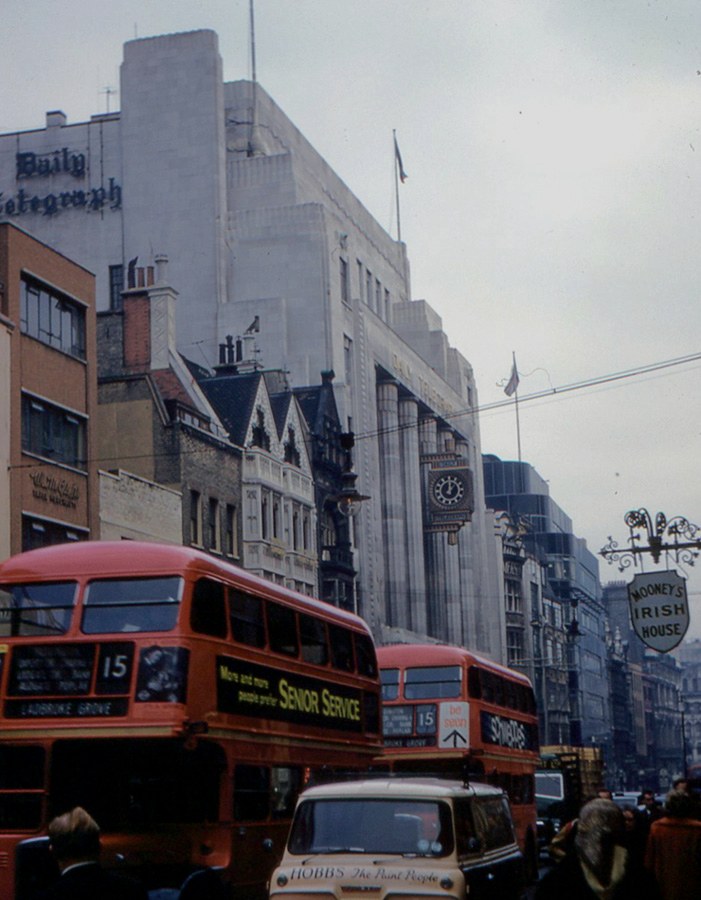
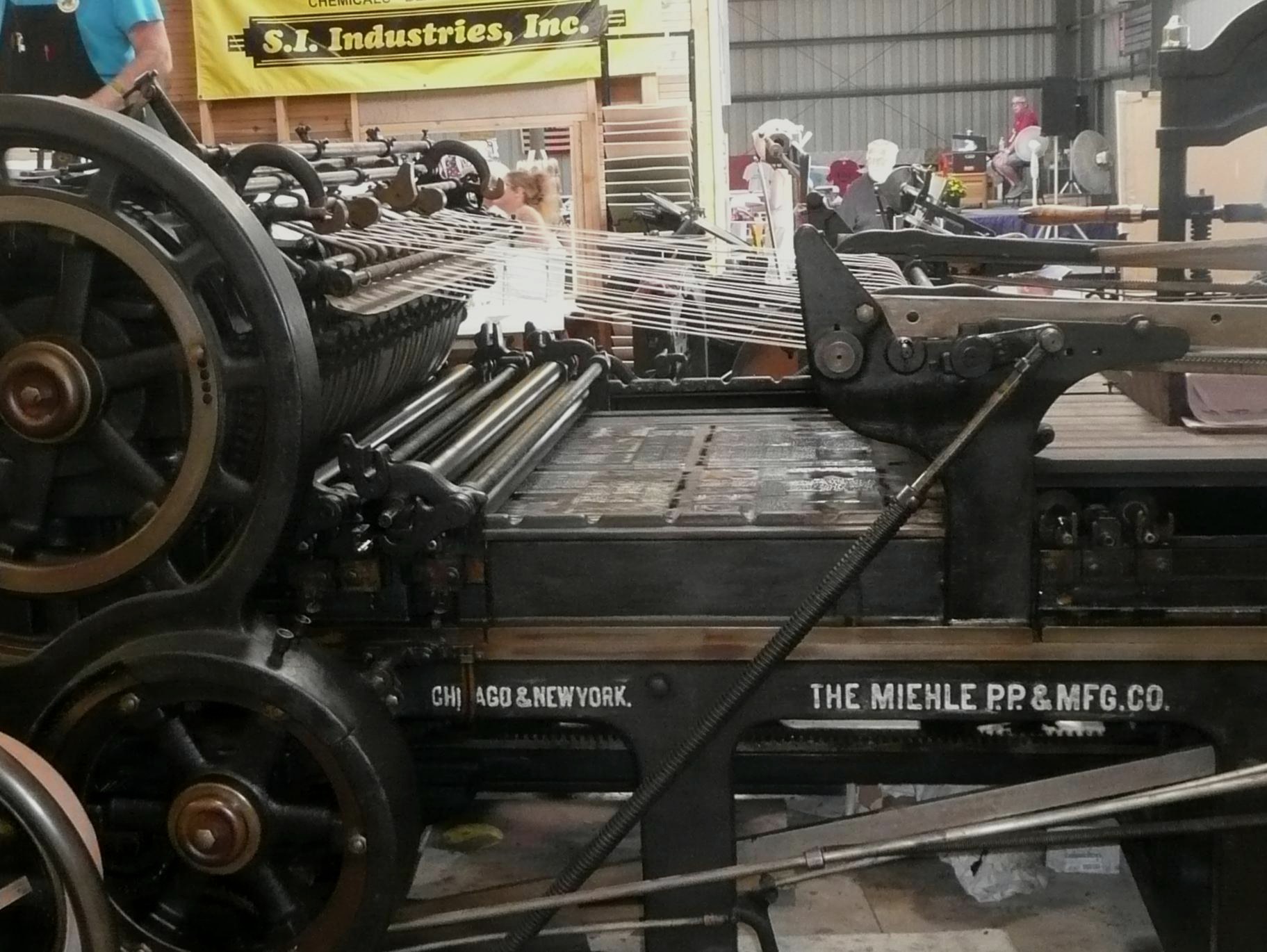
After lunch, in one of the moments several reviews keep returning to, Lamb takes Murdoch out onto Fleet Street and has him crouch to feel the presses rumbling through the pavement. The Film Stage called it lovely. Lodge said that in Ink, you sense that thrum throughout. That is the movie's thesis in a gesture: the paper is a machine before it is a morality play.
From there the film plays like a recruitment heist. Lamb goes hunting for a masthead. Steam room, pool hall, Soho porn theatre — Rooney lists the locations. Most of the writers and editors he wants are at the Mirror. Most of them call The Sun "Rupert's shit sheet" until the money and the titles change their minds. Brian Gleeson is news editor Brian. Christopher Fulford is sports editor Frank. Blake Harrison is chief subeditor Ray. Patrick Kennedy plays the posh, resistant deputy — Lodge names him Bernard Shrimsley; the Wikipedia cast list has Bernard Shrimsley as Patrick, deputy editor. The production is still settling those on-screen name cards in the early reviews. What matters for a viewer is the shape: Lamb builds a room of people the old Fleet Street had under-promoted, then asks them what they actually want to read.
Their answers are not deep. Weather. Television. Gossip. Sport. Sex. Love. Ray's contribution, in Rooney's recounting, is "I like women … boobs and bums." That line is the hinge into Page Three, the topless model feature that would become a British tabloid institution after November 1970. Jules goes along with tasteful soft photos for a while, then balks when Lamb pushes further. She also gets her own women's page — the bargain that brings her across. Rooney calls Foy superb in a role more developed than the stage counterpart. Lodge calls her excellent in a slightly underwritten part and, in his piece, names the character Joyce Hopkirk, the real women's editor associated with that era. Official festival materials and Deadline both stick with Jules Davies. If you are keeping a cast card, use Jules Davies for the film and treat Hopkirk as the historical echo.
The historical book underneath all of this is not disputed in outline. IPC sold The Sun to Murdoch in 1969 after the paper — launched as a broadsheet in 1964 to replace the Daily Herald — had slumped. Circulation sat around 800,000. Losses were about £2 million a year. Murdoch paid £800,000. He already owned the News of the World and wanted weekday work for his presses. The first issue of the relaunched tabloid Sun landed on 17 November 1969. Within a year, circulation had roughly doubled past 1.5 million. In 1978 the paper overtook the Daily Mirror to become Britain's bestselling daily. Those figures come from the paper's own published history and from reporting that has tracked the title for decades. The film compresses the climb into montage and a sales board in Lamb's office. The board is the scoreboard. Every review mentions it.
Now the part the Venice debate is actually about. Does Ink go soft on Murdoch? Barber at BBC Culture says yes, and says it plainly: Pearce's Murdoch is a plucky underdog, a fearless rebel against patronising English snobs, and the film is also a love letter to a pioneering entrepreneur, loyal friend and doting father with no particular political agenda. John Bleasdale in Time Out, quoted by Barber, called it "a toothless, apolitical film" with a "bizarrely moral" Murdoch. Boyle's answer at the press conference was not evasive. He said the 1969 Murdoch was "a breath of fresh air in what was a very rigid British society." He said the film does not "monsterize" Murdoch, which "a lot of people do now." He also said it was important that the audience feels complicit.
Pearce told the same room he had not spoken to Murdoch directly. He had spoken to Elisabeth Murdoch. "She did say to me, 'Dad's very happy that you're playing him,'" Pearce said, per Variety. "But he hadn't seen the film at that point, so we'll see." Graham added that Murdoch came to see the stage play twice — West End and Broadway — and was "very good at sort of not really giving anything away," though he enjoyed the printing-press sequence, "the dirt and the steam and the filth that used to go into making a paper on a daily basis."
Lodge's reading is more careful than a soft-or-hard binary. The film, he writes, does not make a heroic outsider of Murdoch, but the moral battle between owner and editor is ambiguous. The crass sensationalism looks like a combination of Lamb's pledge to give people what they want and Murdoch's dispassionate, sometimes reluctant commitment to back whatever sells. Rooney says the film goes easy on Murdoch and makes him more squeamish than his editor when ethics intrude — which will leave a sour taste for anyone who draws a straight line from The Sun to Fox News. The Film Stage puts Murdoch as the initially reluctant enabler of Lamb's worst tendencies. Across those pieces, the same shape keeps appearing: Lamb drives; Murdoch permits; the audience has to decide what that permission cost.
The cost arrives through a real crime the film puts on screen. Muriel McKay, wife of Murdoch's senior executive Alick McKay, is kidnapped. Lucy Russell and Jonathan Hyde play the couple. Lamb treats the story as grabby headline fodder. Police warn him. He does not back off. Murdoch wonders if his hire has gone too far. Several critics flag this stretch as the turn from romp to reckoning. The Film Stage says the movie becomes more moralizing once Lamb decides to use a tragedy to the paper's benefit. Lodge says it's all fun and games until somebody gets hurt. Rooney says the McKay coverage creates friction with Jules, with Rupert, with the printers, with Scotland Yard. The film is not inventing the kidnapping. It is deciding how much of Lamb's ruthlessness to show in the clear.
Boyle told Venice that cinema would show a darkness the stage play kept off-stage. "In the stage play, the darkness is reported off stage, and yet I knew in cinema you would see it," he said. Then you need an actor who can take you there. He compared O'Connell to Pacino in The Godfather Part II. O'Connell looked surprised. Boyle smirked and said O'Connell was going to hate him for saying it. That is useful colour because it tells you where the director thinks the centre of gravity sits. Not only on Pearce's coiled Murdoch. On O'Connell's Lamb, the editor who starts sceptical and ends as the bulldog who will not take no.
How does the picture sound and look while all that happens? Pemberton's score sits under anachronistic rock. Rooney names Sprints' "Something Gonna Happen" on the staffing overtures and IDLES' "The New Sensation" as the relaunched Sun finds its groove. He compares the charge to Iggy Pop over the Choose Life monologue in Trainspotting. Lodge hears faintly industrial noise under even simple dialogue. Production and costume design are by Carson McColl and Gareth Pugh, both fresh off Boyle's 28 Years Later. Some frames take on the grainy halftone of vintage newsprint. The movie wants you to feel ink, not just watch a biopic.
Graham's play first opened at the Almeida in London in 2017, transferred, and reached Broadway, where it was Tony-nominated. Carvel's Murdoch was the celebrated stage turn. The screenplay is Graham's own. Producers are Boyle, Tracey Seaward, Tessa Ross and Michael Ellenberg — Boyle and Ross reuniting after Slumdog Millionaire. StudioCanal fully financed. House Productions and Media Res are alongside. Principal photography began in London in October 2025, with additional scenes in Saltaire, Hebden Bridge, Halifax and Sowerby Bridge in West Yorkshire. Claire Foy joined that month. Pearce and O'Connell had been attached since August 2025.
Alberto Barbera, Venice's artistic director, announced Ink as the opening film on 16 July 2026. His statement put the credentials in one sentence: an Oscar-winning director, a leading London playwright, and three of the most acclaimed actors in contemporary British cinema. Netflix acquired US and Latin American rights in July, shortly after that announcement. Variety's August dating piece put the theatrical-plus-streaming plan squarely into awards season, with TIFF also on the calendar and Telluride expected in the usual corridor between Venice and Toronto.
Boyle's director's statement on the Biennale page is worth reading in full if you care what he thinks he made. 1969, he writes, was the year we first walked on the moon, and the year Murdoch and Lamb launched a newspaper that was to change the world far more. "Long before Fox News, clickbait, and Truth Social; decades before Twitter, Facebook, Google and OnlyFans, these two men created a new tabloid that, against all the odds, became the biggest-selling newspaper in the world. Cheeky, irreverent, daring: the 'super soaraway' Sun challenged the establishment and remade our world for the modern era." That is the film's preferred frame: disruption first, indictment second.
You can hear the pushback already. Barber's BBC piece is the clearest public version of it from Venice week: if Lamb makes the salacious calls and Murdoch only shows up afterwards to demand an explanation, is that history or absolution? Did the proprietor really have so little control over his flagship? The movie's answer is a shrug you are meant to sit with. Rooney says declining to preach and laying out the facts is Graham's method. Lodge says the closing montage — Fox News to Facebook, modern media cacophony — is not subtle, but it lands. The Film Stage saw faces and Sun headlines in that rush, including "Gotcha" and "The Truth," the paper's most infamous front pages. Whether that coda feels like reckoning or insurance will depend on the viewer.
Let's walk the stage history, because the film did not appear from nowhere. Graham's Ink opened at the Almeida Theatre in Islington in 2017 under Rupert Goold, then moved into the West End, then to Broadway, where it picked up Tony nominations. Carvel's Murdoch was the celebrated turn — Olivier and Tony wins for the role — which is why casting him as Cudlipp on screen is a neat inversion. The man who once played the proprietor now plays the establishment editor who underestimated him. Goold's production, Rooney notes, already had rollercoaster momentum, musical flourishes and bawdy low comedy. Boyle keeps that pulse and adds cinema's licence to cut, zoom and overlay song.
Graham has spent the years since Dear England and Sherwood as one of the busiest British dramatists writing about institutions under stress. Ink is the newspaper chapter of that interest. The play arrived in the early Trump years. The Film Stage calls it a notable precursor to Succession's Logan Roy. Barber's BBC piece reminds you that Murdoch is one of the inspirations for that character. The film lands in 2026 with the real Murdoch still alive at 95, still associated with Fox Corporation, the Wall Street Journal and the New York Post, and still capable of making a casting compliment travel through his daughter to a Venice press room.
Production design is doing more work than a plot summary admits. McColl and Pugh build a Fleet Street that can flip from monochrome grain to gold-filtered colour inside a single lunch. Lodge describes that Rules scene opening in newsprint-grainy monochrome before flushing into colour, Küchler's camera at wildly canted angles, Oates cutting away to a lurid flash-forward. The movie is announcing its method: this will feel like a tabloid even when two men are only talking about a salary. Sound design by Simon Hayes and Johnnie Burn keeps the presses in the mix. Pemberton's score does not wait politely for montage. If you have ever sat through a Boyle film and felt the edit arrive half a second before you were ready, you already know the ride.
O'Connell came into Venice off a run that already had him in Boyle's orbit — the 28 Years Later films — and off Ryan Coogler's Sinners. Variety's festival feature had him describing Lamb's prerogative as simple: fixated on sales numbers, willing to bend rules, "very naughty." That is the performance the early reviews are selling. Lodge calls him terrifically bullish and superb. Rooney watches him move from reactive scepticism to tenacious bulldog. Boyle's Pacino comparison is hype with a point: the film needs Lamb to stay charismatic while the choices get uglier, or the audience checks out before the sales board peaks.
Pearce's Murdoch is the colder instrument. Lodge gives him oily finesse and a faint chill beneath Aussie candor. Rooney finds him low-key hilarious and intimidating, sure of himself, colourful with Australianisms and profanity, never relaxing the focus. The Film Stage calls the performance wonderfully coiled. The character's chip on the shoulder — Australian outsider versus English clubland — is the film's easiest empathy trap, and Boyle walks into it on purpose. When aristocratic bullies sneer, Barber notes, even a fair criticism of the damage Murdoch is doing arrives from a mouth you do not want to agree with. That is craft. It is also the soft-portrait problem in one staging trick.
Foy's Jules is the pressure valve. She wants a serious women's page, not needlework and recipes. She helps push The Sensuous Woman serial — the American sex-advice book British publishers would not touch — which Rooney credits with a new openness around female sexuality in the paper's pages. She also has to live with Page Three and with Lamb. The affair is not the point of the movie, but it stops the newsroom from being a closed male machine. When she balks, the film briefly has a conscience that is not Murdoch's squeamishness and not the Press Council's. That matters in a story otherwise organised around two men's rivalry.
Around them the supporting company keeps the paper feeling staffed. Carvel's Cudlipp is the old Mirror order in a suit — the man who laughs Lamb out of the Press Council Awards room, the humiliation several reviews treat as the spark that takes Lamb's gloves off. The Film Stage hears portentous shades of Trump at the 2011 White House Correspondents' Dinner in that gala. Whether you buy the parallel or not, the scene's job is clear: Lamb's war with the Mirror is personal before it is ideological. Sports, news, subs, the resistant deputy — each gets a contour so the recruitment montage is not only montage.
Money and logistics sat under the glamour. Boyle told the Venice presser the film was made with not a lot of money and was not easy. "You think nobody's going to see this; it's about Britain, and it's about Fleet Street. Nobody knows what Fleet Street is anymore." StudioCanal's full financing and the Netflix US deal answer that fear with distribution muscle. House Productions (Tessa Ross), Media Res (Michael Ellenberg) and Boyle's own producing hand are the banner. Executive producers listed across Deadline and the Biennale page include Anna Marsh, Ron Halpern, Joe Naftalin, Sudie Smyth, Tonia Davis, Zoe Edwards and Graham himself. Casting was Gail Stevens and Rebecca Farhall. That is a festival-ready credits block, not a microbudget shrug.
Yorkshire filming gives the Lamb half of the story a geography. Saltaire, Hebden Bridge, Halifax, Sowerby Bridge — local papers clocked the crew in October 2025. Lamb is a northern editor in a southern industry. The film needs that distance to make Murdoch's outsider pitch land. Two men who do not belong to the London club recognise each other across a lunch table. Then one of them starts winning so hard the other has to decide whether winning was the only brief.
What should a reader do with the soft-Murdoch argument? File both sides. Boyle wants complicity, not a monster mask. Barber wants a harder ledger of consequences. Lodge and Rooney split the difference by locating the film's real engine in Lamb while noticing how often Murdoch gets to play startled parent. Graham, who watched Murdoch watch the play twice without tipping his hand, has written a proprietor who is flattered by the casting and implicated by the ending montage. That is a stable enough reading for opening week. Later essays will dig the archives. This piece is the Venice wire plus the first critics' room.
One accuracy note worth keeping in the margin. Lodge flags that the film's lunch pitch pulls Lamb from the Mirror, while historical accounts also place him at the Daily Mail along his path. Wikipedia's film page currently summarises Lamb as Yorkshire-born editor for The Sun and former Northern editor for the Daily Mirror. Trade reporting around the premiere repeats the Mirror-poach framing. Treat the movie's employment detail as dramatised. Treat the 1969 purchase price of £800,000, the 17 November 1969 relaunch, the climb past 1.5 million inside a year, and the 1978 overtake of the Mirror as the historical spine the dramatisation hangs on.
Page Three itself arrives in the film as argument, not as nostalgia. The real feature became a fixture after November 1970 and helped define the paper's reputation for decades. On screen, Jules's resistance and Ray's crude staff-room honesty share the frame. Boyle is not asking you to celebrate the page. He is asking you to watch a newsroom talk itself into it because sales are the only god that answers the phone. Whether that scene plays as critique or as vibes will depend on how much iron you think the rest of the film has put in the fire.
The awards path is now a machine of its own. Venice opener. TIFF selection. Expected Telluride stop. December limited theatrical in the US. January streaming. StudioCanal's January UK date. That corridor is how a Fleet Street story becomes an Oscar-season object. Netflix's 2026-27 slate is crowded; Variety's dating piece stacked Ink beside other streamer plays and still called the strategy a campaign signal. Boyle already has the Oscar hardware from Slumdog Millionaire. O'Connell is the performance the early notices are building a case around. Pearce has the awards-season chill. Foy has the craft reputation. None of that guarantees a statue. It does guarantee the movie will still be in the conversation when the Lido lights come down on 12 September.
For Australian readers — and this paper has plenty — there is an extra layer. Murdoch's origin story is Australian. Pearce is Australian. The Sun purchase is the moment a Melbourne-raised proprietor plants a flag on Fleet Street and refuses to ask permission. Boyle's "breath of fresh air" line will play differently in Adelaide than in a London media column. You can hold two thoughts: the 1969 outsider story is real, and the later empire is the reason people flinch at a warm portrait. Ink is interested in the first thought for most of its runtime. The coda is where it remembers the second.
So here is the viewing brief from this desk. See it in a cinema in December if you can — Boyle's cutting and Küchler's camera are doing theatrical work, and the press thrum wants a room. If January streaming is your lane, watch it once for the ride and once for the argument. Keep the early Rotten Tomatoes and Metacritic bands in mind as opening-week weather, not a final verdict. Keep the ovation length as colour, not proof. Keep Jules Davies as the film's name for Foy's character. Keep 17 November 1969 and 1978 as the historical posts. And keep Boyle's own warning in your pocket: he made a film about a street half the world has forgotten, and Venice still stood up for it.
For a reviews desk, the practical question is simpler. Is Ink worth the December cinema ticket before the January stream? The Venice room said yes with its feet. The first critics' boards are positive without being unanimous hagiography. O'Connell is the performance almost everyone elevates. Pearce is the chill under the candour. Foy is the working-class intelligence the film needs so the newsroom is not only men shouting about sales. Boyle has made a Fleet Street movie that moves like a chase film. If you liked the pulse of Trainspotting or the talk-as-combat of Steve Jobs, this is the same director applying that toolkit to a newsroom.
A few calendar facts to keep on the desk. Festival: 83rd Venice International Film Festival, 2 to 12 September 2026. Opening night and competition entry: Ink, 2 September. Runtime: 116 minutes, also listed as 1 hour 56 minutes in US trade notices. US limited theatrical: 11 December 2026 (Netflix). US and Latin America streaming: 8 January 2027 (Netflix). UK theatrical: 8 January 2027 (StudioCanal). StudioCanal theatrical territories named around the premiere also include Italy, France, Germany, Poland, the Benelux, Australia and New Zealand. TIFF is booked. Golden Lion contention is live until the jury settles on 12 September.
One more thing about tone, because this paper covers media as craft. Ink is a movie about a tabloid that won by being louder, faster and less embarrassed than the room around it. Boyle stages that win as entertainment first. The early reels feel optimistic — outsiders finally get a seat, Jules gets a page, the sales board climbs. Then the McKay story and the Page Three fight arrive, and the film asks whether the seat was worth the price. It does not deliver a closing speech that resolves that. It delivers a montage and sends you out onto the Lido night.
If you are coming to it cold, start with the cast and the dates, then let Boyle's cutting do the arguing. Pearce's Murdoch is not a cartoon villain. O'Connell's Lamb is not a simple hero. The Sun on screen is a machine that learned what people would buy and then kept selling it. The Venice opener put that machine under festival lights and got a multi-minute ovation for the trouble. December is when US audiences get to test the same question in a dark room of their own.
Until then, the record from 2 September is clean enough to file. Opening film. Competition. Positive early scores. A director who will not monsterize his subject. An editor character who may be the real engine. A newspaper story that still sells tickets because people, as Lamb says in the film, need stories. Ink is one more of them — about the people who decided which stories counted.
The paper
Comments
No notes on this story yet.
Sign in to comment