
Potentia Energy said on 27 August 2026 that it had completed the Quorn Park solar hybrid in New South Wales. The plant is 98 megawatts of solar and a 20 megawatt / 40 megawatt-hour battery, about 10 kilometres northwest of Parkes. The build is listed at A$190 million. pv magazine Australia and ESS News filed the completion the same day.
Quorn Park is the first hybrid project in Australia’s National Electricity Market to hold a single hybrid generator performance standard. The solar and the battery sit behind one point of connection and one power-plant controller. That is the news: not a second pad of panels, but a rule change made real in central western NSW.
27 August is the completion date on the trade pages. Potentia Energy is the developer. The company is a joint venture of Italy’s Enel Group and Japan’s Inpex. Quorn Park is the named site. Parkes is the nearest town of record, ten kilometres to the southeast of the fence. A$190 million is the build figure both ESS News and pv magazine Australia printed, with a US dollar conversion of about US$136.4 million. Those are the company and trade-press numbers. There is no separate Commonwealth press release in this file.
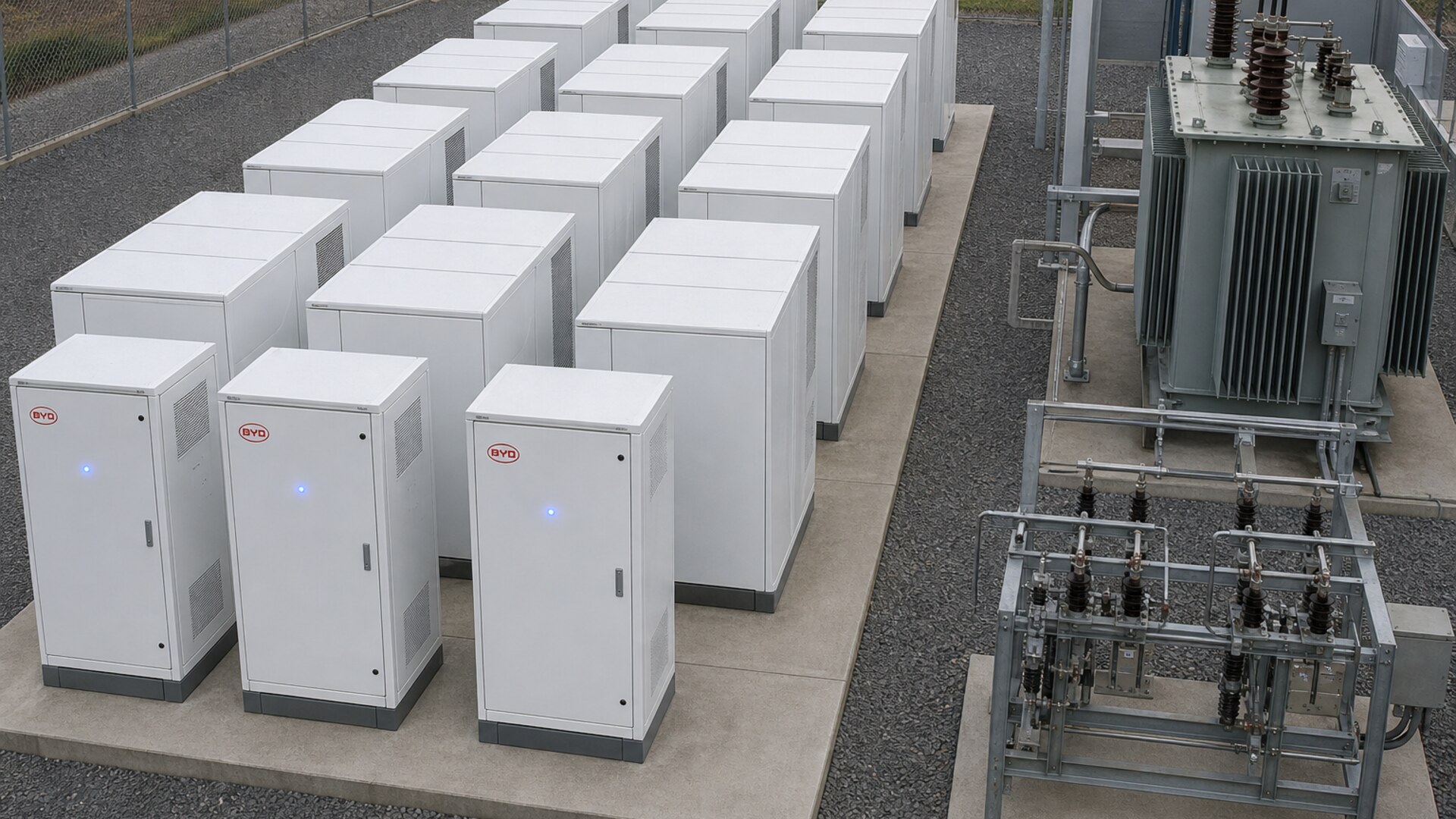
The solar nameplate is 98 megawatts. The battery is 20 megawatts and 40 megawatt-hours. Two hours at nameplate power is the arithmetic on those two figures. About 160,000 panels. A sixteen-unit BYD battery energy storage system, described in earlier Potentia notes as Cube Pro utility-scale cabinets. Beon Energy Solutions delivered the battery work. SMA Australia supplied inverters for the solar park and the battery. LONGi, BYD, Nextracker and Proa Energy Intelligence are on the delivery list Potentia put with the announcement. Zen Energy, the South Australian gen-tailer, holds a ten-year power purchase agreement for the plant. That PPA is on the ESS News page. The inventory is closed enough to print.
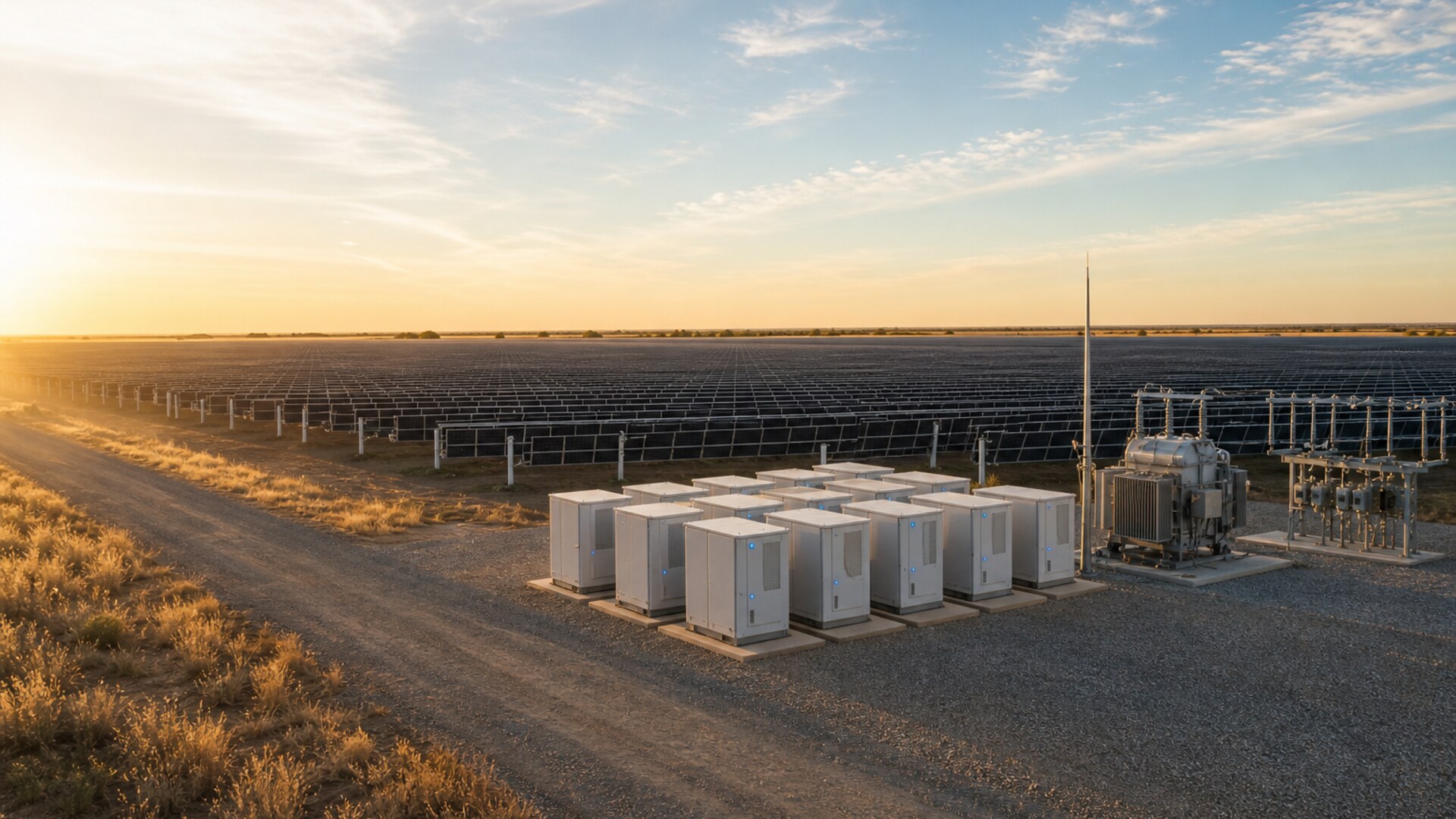
The generator performance standard is the regulatory object that makes this plant different from a co-located pair. Historically the National Electricity Market treated a solar farm and a battery at the same site as two separate machines with two connection agreements. Quorn Park was approved as one hybrid under a single GPS. One controller. AC coupling. Dynamic interaction between the solar inverters and the battery inverters managed behind a single point of connection. The plant can store its own solar output or import from the grid. ESS News lists three operating modes: solar only, battery only, and solar-battery hybrid. Time-shifting and arbitrage sit inside those modes. The rule is the news as much as the hardware.
pv magazine Australia puts annual output at about 200,000 megawatt-hours. That is the trade figure used here. It is an approximate capacity, not a metered year. A$190 million for a first-of-type hybrid GPS plant in the NEM is a capital sentence, not a levelised-cost model. The Standard is not running a spreadsheet on Parkes. It is filing that the build is complete, connected, and described as the first single-hybrid GPS project in the market.
Werther Esposito, Potentia’s chief executive, said Quorn Park is an example of where the energy system is heading. “As more renewables enter the grid, the challenge isn’t simply how much clean energy we can generate but how flexibly we can use it,” Esposito said, in the quote both trade outlets ran. He added that combining solar and battery as a genuinely integrated facility creates greater flexibility to generate, store and dispatch renewable energy to the needs of the grid. Gabriele Mallarini, Potentia’s chief operations officer, said bringing solar and storage together as one plant adds technical and operational complexity beyond parking two assets next to each other. “What matters now is how these technologies perform together in the real world,” Mallarini said. “Quorn Park gives us an opportunity to demonstrate the value that truly integrated renewable generation and storage can provide to the electricity system.” Those sentences are Potentia’s. They are reprinted as attributed speech, not as The Standard’s forecast.
Parkes is inland New South Wales. Ten kilometres northwest is still the Parkes region on a map. Central western NSW is the geography the trade pages use. The plant is not a Sydney rooftop story and not a Hunter Valley coal story. It is a hybrid on the NEM’s connection rules, sitting on flat country with panels, trackers, cabinets and one switchyard. The good news is practical: one GPS, one controller, three modes, a named PPA, and a completed A$190 million build.
What 27 August is not is as useful as what it is. It is not a claim that every future hybrid in the NEM will copy Quorn Park’s exact kit list. It is not a retail bill cut for a named Parkes household. It is not a federal funding announcement. It is not a capacity-factor audit. The pages that exist say the build is complete, the hybrid GPS is first in the market, the solar is 98 megawatts, the battery is 20 megawatts and 40 megawatt-hours, the panels number about 160,000, the battery is sixteen BYD units, the partners are named, and Zen Energy holds ten years of offtake. That is the inventory.
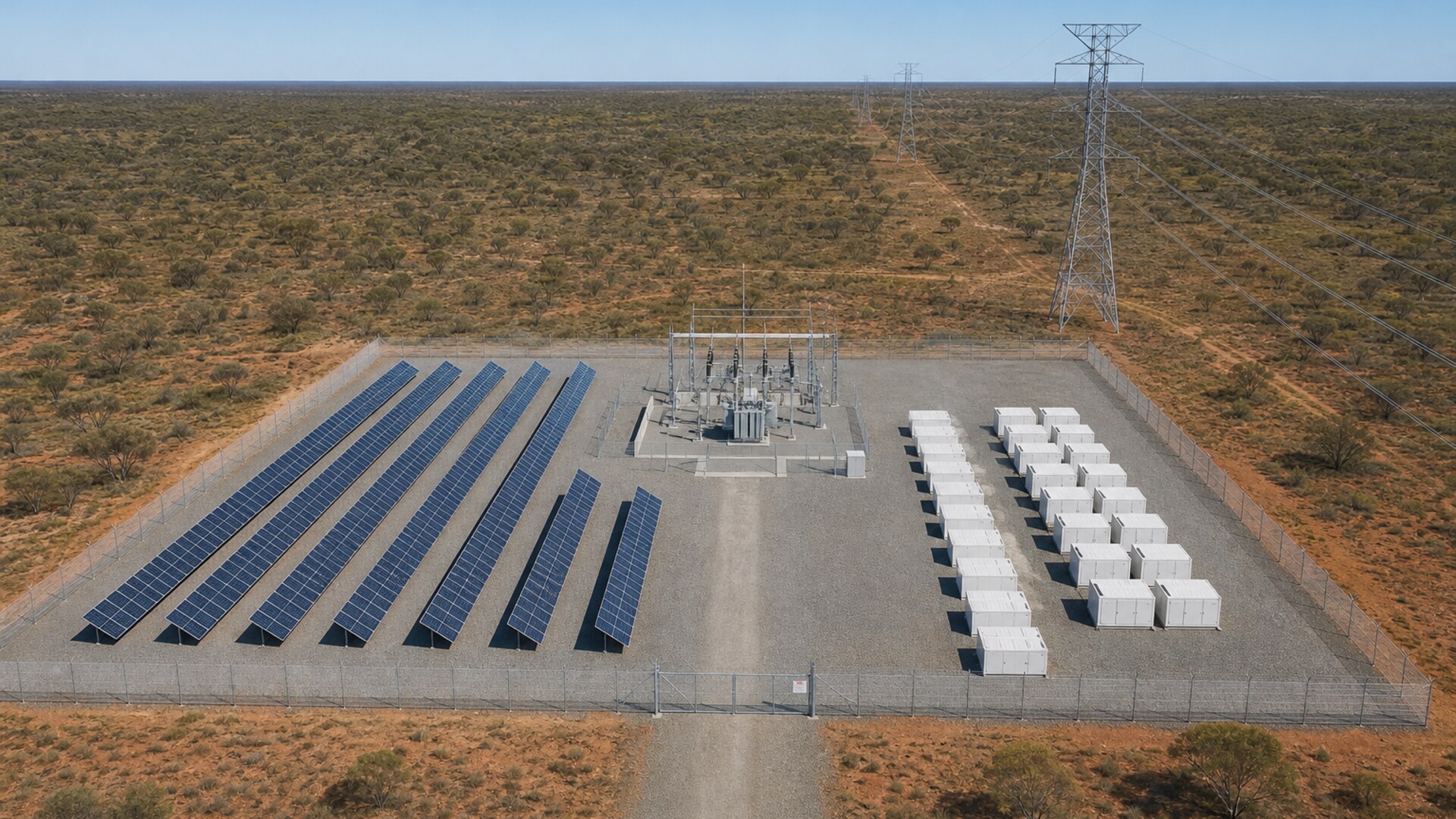
AC coupling is the engineering phrase that keeps showing up. The solar and the battery talk to the grid through inverters that the single power-plant controller coordinates. Under the older two-machine model, each asset had its own connection paperwork. Under the single hybrid GPS, the market sees one generator at the connection point. Flexibility is the commercial word Potentia used. The operational word is three modes. Solar when the sun is up and the price or the signal says sell. Battery when the cabinets should discharge. Hybrid when both work as one plant. Import from the grid is also on the ESS News description: the AC-coupled plant can charge from the network as well as from its own array. That is a grid asset, not only a generator.
The delivery roster is long enough to keep on the page. Beon Energy Solutions for the battery engineering and construction. SMA Australia for inverters on solar and storage. LONGi for modules. BYD for the Cube Pro cabinets. Nextracker for tracking. Proa Energy Intelligence on the list Potentia published with the wrap. Enel and Inpex as the joint-venture parents behind Potentia. Zen Energy as the ten-year offtaker. None of those names is invented here. They are the names on the 27 August trade filings.
A first hybrid GPS in the NEM is a regulatory first as much as a construction first. Approvals and connection standards are how large plants actually reach the wires. Quorn Park’s claim, as Potentia and the trade press state it, is that it cleared a single hybrid standard and then finished the build. The Standard is not the Australian Energy Market Operator. It is reprinting the completion and the standard as reported. 98 megawatts. 20 megawatts. 40 megawatt-hours. About 200,000 megawatt-hours a year on the approximate figure. About 160,000 panels. Sixteen battery units. Ten kilometres from Parkes. A$190 million. 27 August 2026.
Positive news on the Australia desk is often a plant that finished, a rule that allowed it, and a buyer who signed. Quorn Park has all three on the record used here. The panels are in the ground. The cabinets are on the pad. The offtake is a decade with Zen Energy. The GPS is single. The modes are three. Central western New South Wales has a hybrid that the market can dispatch as one machine. That is the story dated 27 August, still current on Sunday 30 August.
The paper
Comments
No notes on this story yet.
Sign in to comment