
Intel put LGA1954 and NVL-S on the same line in its Design-In Tools store. The listing is an “ILM Kit for the LGA1954 NVL-S Interposer for the Gen5 VR Test Tool.” eTeknix, PCCentral, and TopCPU all filed the catalog line on Sunday, 30 August. NVL-S is Intel’s shorthand for Nova Lake on the desktop. The socket name and the platform name are now on an Intel-operated page together.
That is not a keynote. It is not a box on a shelf. It is a validation kit for people who test voltage regulators. The kit is how Intel just confirmed, in public, that the next desktop generation does not use today’s LGA1851. Arrow Lake-S stays on 1851. Nova Lake-S moves to 1954. A new board is not a rumour anymore. It is the pin count in the catalog.
The 900-series chipset family is the board side of the same move. Z990 and Z970 are the enthusiast names already in the trade press. TechPowerUp had those two chipsets on 8 February. Sunday’s listing does not repeat the chipset split. It repeats the socket. LGA1954. NVL-S. Gen5 VR. Those four tokens are the news.
Cooler makers were early. Corsair and Asetek have been printing LGA1954 on compatibility tables for months. Shipping records tied the socket to Nova Lake more than a year ago. Photographs of a package leaked. Sunday is the first time Intel’s own store put the two names in one product title.
PCCentral time-stamped the file 10:54 a.m. on 30 August. TopCPU dated it Sunday, 30 August, and added the product-family reading: Core Ultra 400 series on 900-series boards, with a first-quarter 2027 launch still the working window in that write-up. Intel did not put a launch month on the kit listing. This page will not invent one. Q1 2027 is the date the secondary sources are using. The primary is the kit name.
LGA1851 is 1,851 contacts. LGA1954 is 1,954. The difference is 103 pads. That is a new keying notch, a new contact map, and a new independent loading mechanism. eTeknix says the platform is moving to a dual-lever retainer, 2L-ILM, to spread pressure across the integrated heat spreader. Current Intel desktops have a habit of bowing the spreader in the middle. A second lever is a mechanical answer to a thermal problem. It is also another reason last year’s cooler bracket will not just drop on.
The listing exists because motherboard and power-delivery vendors have to test the socket before a retail board exists. A Gen5 VR test tool is a voltage-regulator bench, not a store SKU. Some Design-In parts are restricted to approved companies. The fact that the title is on a public catalog page is what Sunday’s clips are treating as the confirmation. VideoCardz called it the first official Intel reference pairing the socket and the desktop platform. The Cloudflare wall on that site is not a source. eTeknix and PCCentral are.
A user named harukaze5719 posted a screenshot of the LGA1954 NVL-S line on 28 August. eTeknix embedded that post. The store page is the document. The screenshot is how the trade press found it. Two days later, on Sunday, the filings landed. This paper is dating the confirmation to 30 August because that is when the outlets put Intel’s catalog on the record. The kit may have been sitting there on Friday. Sunday is when it was read.
Arrow Lake-S, the current desktop generation, is LGA1851 and the 800-series boards, Z890 among them. A Nova Lake-S chip will not seat in that socket. The 900-series boards are the new hole. Z990 is expected to carry the wider I/O. Z970, in the February TechPowerUp reading, looks like a smaller die with overclocking still switched on — a B-class floor plan with a Z-class unlock. Intel has not published lane counts for either chipset in the kit listing. Those counts stay off this page.
What Sunday does lock is the upgrade path for anyone buying a desktop this winter. An Arrow Lake board bought in 2026 is a one-generation seat. The next Intel desktop, whenever the box actually ships, needs a 1954 board and a 900-series chipset. That is a full platform swap: board, cooler bracket, and, if the 2L-ILM footprint differs, a new backplate. Memory generation is not in the kit title. Do not write a DIMM story the catalog did not tell.
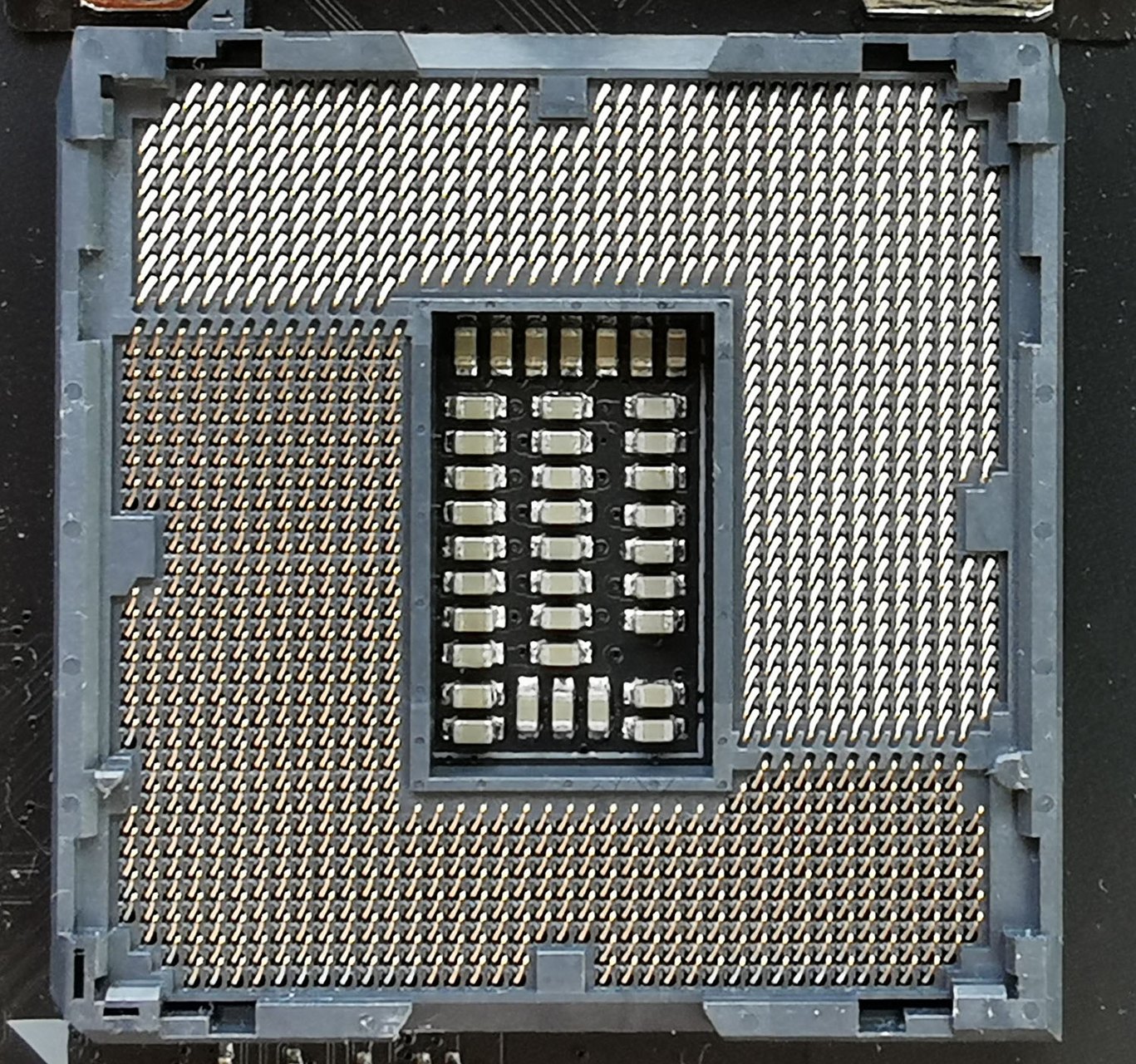
Nova Lake-S is a desktop code name. It is not a laptop paper. The “-S” is the socketed part. Intel has not used this listing to talk about mobile. The still on this page is an older land-grid socket photographed from above, gold contacts, empty, no processor in the well. It is here as a socket, because a socket is the object. It is not a photograph of LGA1954. That pin-out is not on a public camera this desk will trust. The caption says so.
Builders who want a number on the cooler side already have one from the aftermarket, not from Intel’s Sunday title. Corsair and Asetek listing LGA1954 means a bracket is being tooled. It does not mean a street date. A cooler PDF can be early by a year. The kit listing cannot. A voltage-regulator interposer is ordered when boards are close enough to need one. That is the difference between a leak and a catalog.
This desk will not write a teraflop story on a hyphenated SKU. No clock, no core count, no memory generation, no wattage showed up in the kit name. Those will come when Intel wants a keynote. Sunday’s job is smaller and cleaner. The socket is 1954. The platform tag is NVL-S. The board family waiting for it is 900-series. The seat you own is 1851. Those four facts are enough to file.
A test-tool title is a small document. It is also the kind of document that ends an argument. For a year the socket number lived in shipping manifests and cooler PDFs. On Sunday it lived on Intel’s own hyphenated product name. LGA1954. NVL-S. The next desktop will not drop into the board you already own. That is the metric. The kit is the source.
The paper
Comments
No notes on this story yet.
Sign in to comment