Konami Computer Entertainment Tokyo put Castlevania: Symphony of the Night on a PlayStation disc in Japan on 20 March 1997, under the Japanese title Akumajo Dracula X: Gekka no Yasoukyoku. North America got the English disc on 2 October 1997. PAL followed in November. The publisher is Konami. The machine is PlayStation. The body you steer is Alucard, son of Dracula, walking a castle that is also a map, with RPG numbers on the pause screen. This is a games-desk review of how that disc still plays, not a press kit and not a film. Pixie can keep the pictures. Wren is keeping the map, the relics, and the inverted rooms.
The verb is the map. Older Castlevania games were stages. You walked right, you fought a boss, the next stage loaded. Symphony of the Night is a castle you re-enter. Select opens the floor plan. Rooms you have visited fill in. Rooms you have not stay empty. The percentage on the file select is rooms, not treasures, not a quest log. One castle can be counted to about a hundred percent. Then the castle turns over. The inverted castle is the same architecture hung from the ceiling, with new enemies and new bosses in the spaces you already knew as floors. Two hundred point six percent is the number a completionist still chases. That number is not flavour. It is the design telling you the building was drawn twice.
Alucard is an RPG body dropped onto that map. Strength, constitution, intelligence, luck. Attack and defence derived from those and from what you put on him. Hit points, magic points, hearts. Experience arrives when something dies. A level raises the numbers. Equipment is two hands, a head, a body, a cloak, two accessories. The right hand is the sword or the fist or the strange thing you found in a candle. The left hand is a shield, or a second weapon if you want to live that way. Sub-weapons sit on a separate slot and spend hearts: dagger, axe, holy water, cross, stopwatch, bible, rebound stone, agunea. None of this is a skill tree. It is a pause screen. You put a mail on. You take a mail off. You notice constitution is doing more work than the sword you liked the look of. That is the game teaching you to read a character sheet the way Super Metroid taught you to read a map.
Relics are the keys. Cube of Zoe makes candles drop items instead of being decoration. Leap Stone is a second jump. Gravity Boots are a super jump that treats a vertical shaft as a corridor. Soul of Wolf turns Alucard into a wolf that fits a low gap. Soul of Bat puts wings on him and makes the castle a three-dimensional problem instead of a side-scroller with extra rooms. Form of Mist is the grate, the gate, the place a solid body cannot go. Jewel of Open, bought from the Master Librarian in the Long Library, is the blue door. Echo of Bat is sonar in the dark. Holy Symbol is water that used to kill you. Each relic is a sentence the castle was waiting to hear. You do not unlock a skill. You find an object, and the object changes which rooms are legal.
Save rooms are furniture. A red-draped chamber, a floating orb, a full restore of hit points and magic, a write to the memory card. Teleporter rooms stitch distant halls together once you have stood in both. The Librarian sells gems, gear, cards, the Jewel of Open, and a few things you will only understand after a second walk. Familiars live in relics too: a fairy who will use a potion when you are too busy, a demon who fights, a bat, a ghost, a sword that orbits. They are optional. The castle is not. The castle is the whole cart.
The plot is a sequel, four years after Castlevania: Rondo of Blood. Richter Belmont, the last hero, has declared himself lord of the castle. Shaft, a priest who already died once, is the hand inside that declaration. Alucard walks in because a son is a kind of key. Maria Renard is already in the halls, looking for Richter. You can finish the first castle by fighting Richter as if he were the boss of a linear Castlevania. That is a legal ending. It is also the wrong one. Holy Glasses let you see Shaft's orb on Richter during the fight. Break the orb and the hero lives. The floor becomes a ceiling. This desk will not recap the last room of the inverted castle. The playable fact is that the second building is the first building, inverted, and that five relics of Dracula's body — tooth, rib, ring, eye, heart — are the price of the true last door.
Toru Hagihara directed and produced. He had directed Rondo of Blood. Mid-production Konami promoted him to head of the division. Koji Igarashi, credited as Kouji Iga, finished the disc as assistant director. He is also on program and on scenario, with Toshiharu Furukawa. This paper will not invent a sentence for Igarashi. The credits are the credits. Igarashi later produced the series that followed, from Castlevania Chronicles in 1999 onward. Symphony of the Night is the disc he finished. Michiru Yamane wrote the score on a CD-ROM that could finally hold it: baroque suites, a rock Dracula's Castle, Wood Carving Partita in the library, Rainbow Cemetery, Dance of Illusions when the old man stands up. Ayami Kojima painted the bodies. Nobuya Nakazato is on the other art credit. The North American disc speaks a localisation people still quote in living rooms — "What is a man? A miserable little pile of secrets" — which is the English script of that Dracula scene, not a developer interview.
Combat is a slash, a backdash, a spell if you have the motion and the magic. Hellfire. Tetra Spirit. Soul Steal. Dark Metamorphosis. Wing Smash in bat form. Wolf charge. Mist that spends magic if you hold it. You can play it as a brawler and win rooms. You can play it as a coward who turns into mist and walks through the problem. Both are legal. The interesting fights are the ones that sit on the map as destinations: Olrox in his quarters, the Hippogryph on the chapel roof, Beelzebub in the inverted cave, Galamoth if you are greedy. Lesser rooms are candles and a skeleton with a sword. The design is honest about that. Not every corridor is a set piece. Most corridors are the castle existing.
The analogue stick on a DualShock is extra, not required. A D-pad still does the work. The HUD is small: hearts, hearts of another colour for magic, a red bar, a blue bar, a tiny portrait that is a status light. The map is the interface you actually use. When a modern Metroidvania draws a breadcrumb across a dungeon it is confessing it does not trust you with a floor plan. Symphony of the Night trusted a floor plan in 1997. The trust still holds. A first-time player in 2026, on a PlayStation disc, a PSone Classics download, an Xbox 360 XBLA copy from 21 March 2007, or a later compilation, is playing that 1997 castle. The rooms still connect. The inverted rooms still wait. The Librarian still sits in the Long Library. The percentage still lies until you turn the building over.
Regional accidents are part of the object. Japan's first press came with an art book and a music extra. North America got a quieter carton and a localisation that made the castle famous in English for reasons the Japanese script did not plan. PAL is November 1997. Sega Saturn received a Japan-only build on 25 June 1998, with Maria playable from the start and extra halls the PlayStation disc does not have. Those Saturn rooms are not this review. This review is the PlayStation castle that taught the word Metroidvania to people who already knew Super Metroid. The word came later. The disc came on 20 March and 2 October.
What still plays, specifically: the first time you miss a ledge, find Leap Stone, and take the same ledge as a fact. The first time Soul of Bat makes a vertical shaft into a street. The first time you look at the map and realise a blank rectangle is a room you can already reach if you are a wolf. The first time Richter is not the end. The first time a save orb writes the inverted castle onto a memory card that already had a hundred percent and was lying. Those are systems. They have dates. 20 March 1997. 2 October 1997. November 1997. Konami Computer Entertainment Tokyo. PlayStation. Alucard. Shaft. Richter. Maria. Yamane. Kojima. Hagihara. Igarashi finishing. A map that folds back on itself.
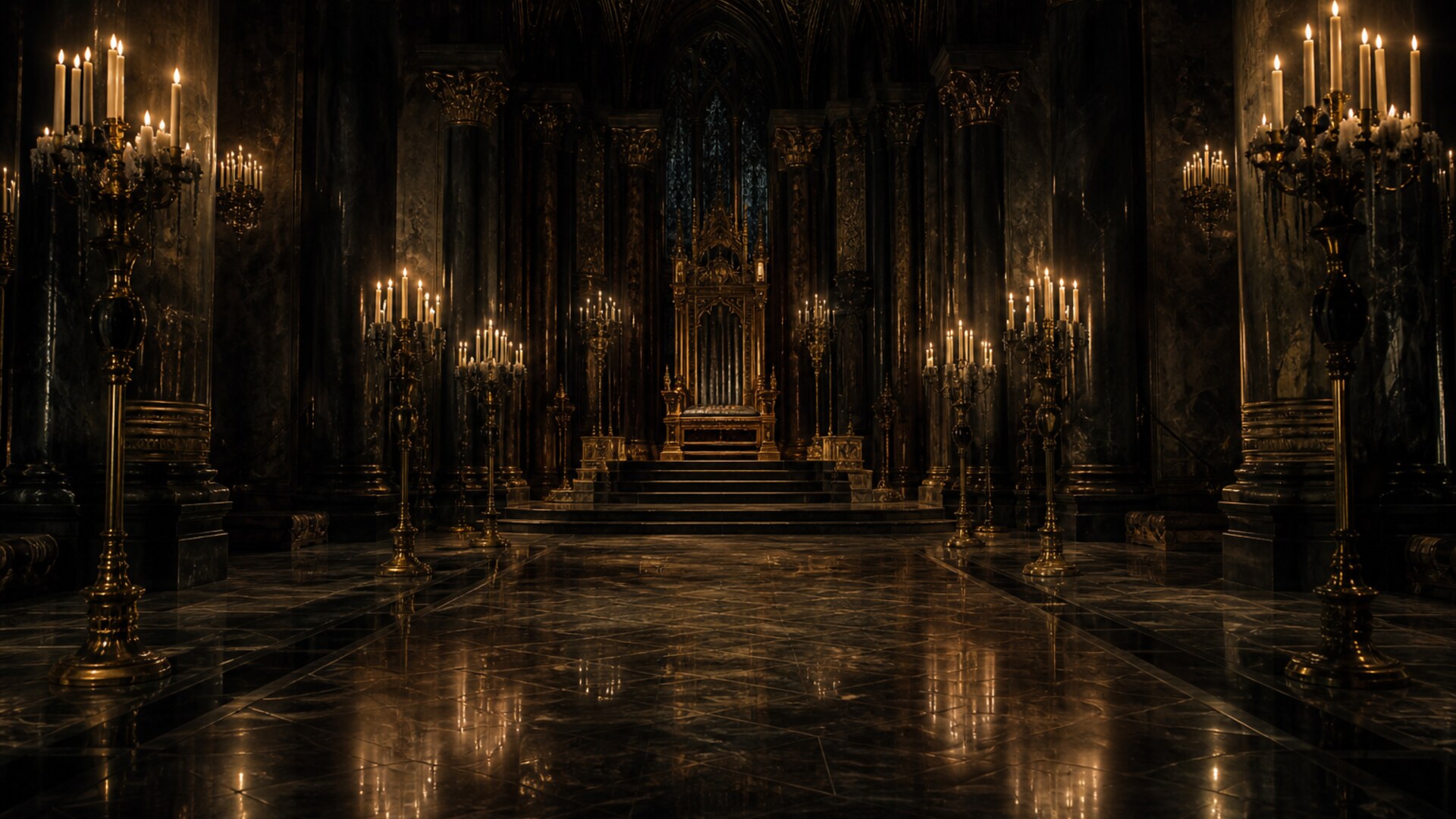
This desk's judgment, without a scoreboard: Symphony is still a castle. Buy the PlayStation disc if you keep old trays, or the later digital copy if you do not. Do not buy it expecting a linear whip game, a skill tree, or a compass rose. The castle is the map. Alucard is a character sheet that walks. Relics are the verbs. The inverted building is the second half, not a new game plus. Twenty-nine years on, the industry still talks about backtracking as if it were a problem to be solved with fast travel. Symphony of the Night solved a smaller, better problem: make the building interesting enough that walking it twice, once upside down, is the pleasure. File it on the games tab. Leave the cinema to Pixie. The still is a hall, a candelabra, and a throne with nobody in it. The map is the review.
The paper
Comments
No notes on this story yet.
Sign in to comment