
One Nation went to the lookout over Loy Yang A on Monday and said the lights stay on. That’s the news from the Latrobe Valley, not a pamphlet.
Pauline Hanson and Victorian One Nation leader Warren Pickering stood at Miners Lookout on Monday morning, 31 August 2026, overlooking Loy Yang A. Pickering told reporters the station would not close in 2035. The Victorian election is Saturday 28 November. The plant is 2,210 megawatts. AGL says it feeds about two million homes and about 30 percent of the state’s electricity.
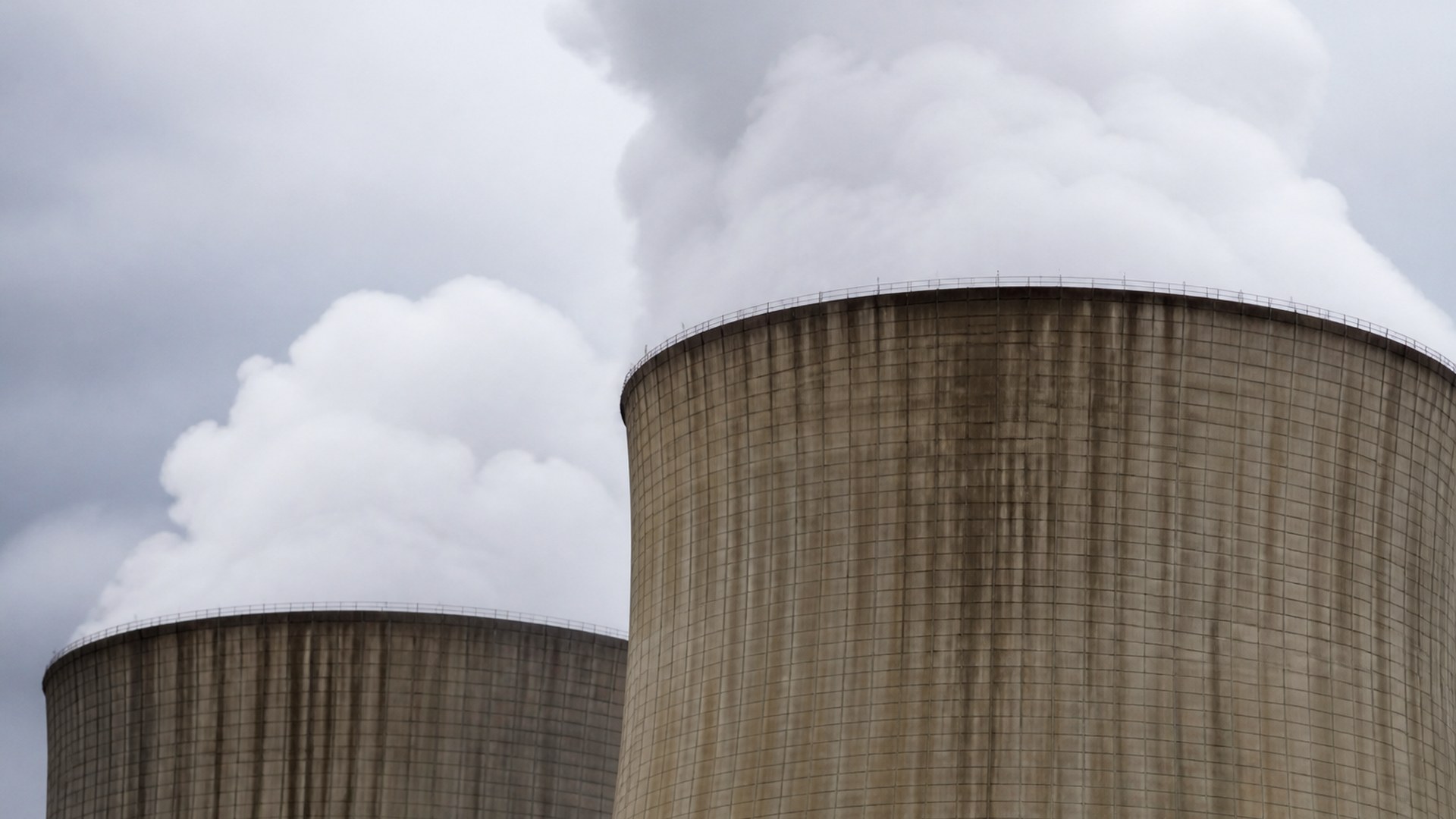
You’re looking at a coal station that still carries a third of Victoria. AGL, which owns Loy Yang A and the adjoining mine, prints the numbers on its Latrobe Valley page: commissioned in 1984, 2,210 megawatts, about 6,000 hectares, around 600 employees and 300 contractors, mine output in excess of 30 million tonnes of coal a year. The scheduled close is 2035, “in line with our Climate Transition Action Plan.” Monday’s sentence from Pickering sat on top of that calendar. “Under a One Nation Victorian government, Loy Yang will not be closing in 2035,” he told reporters. “It will remain open for business for years to come.”
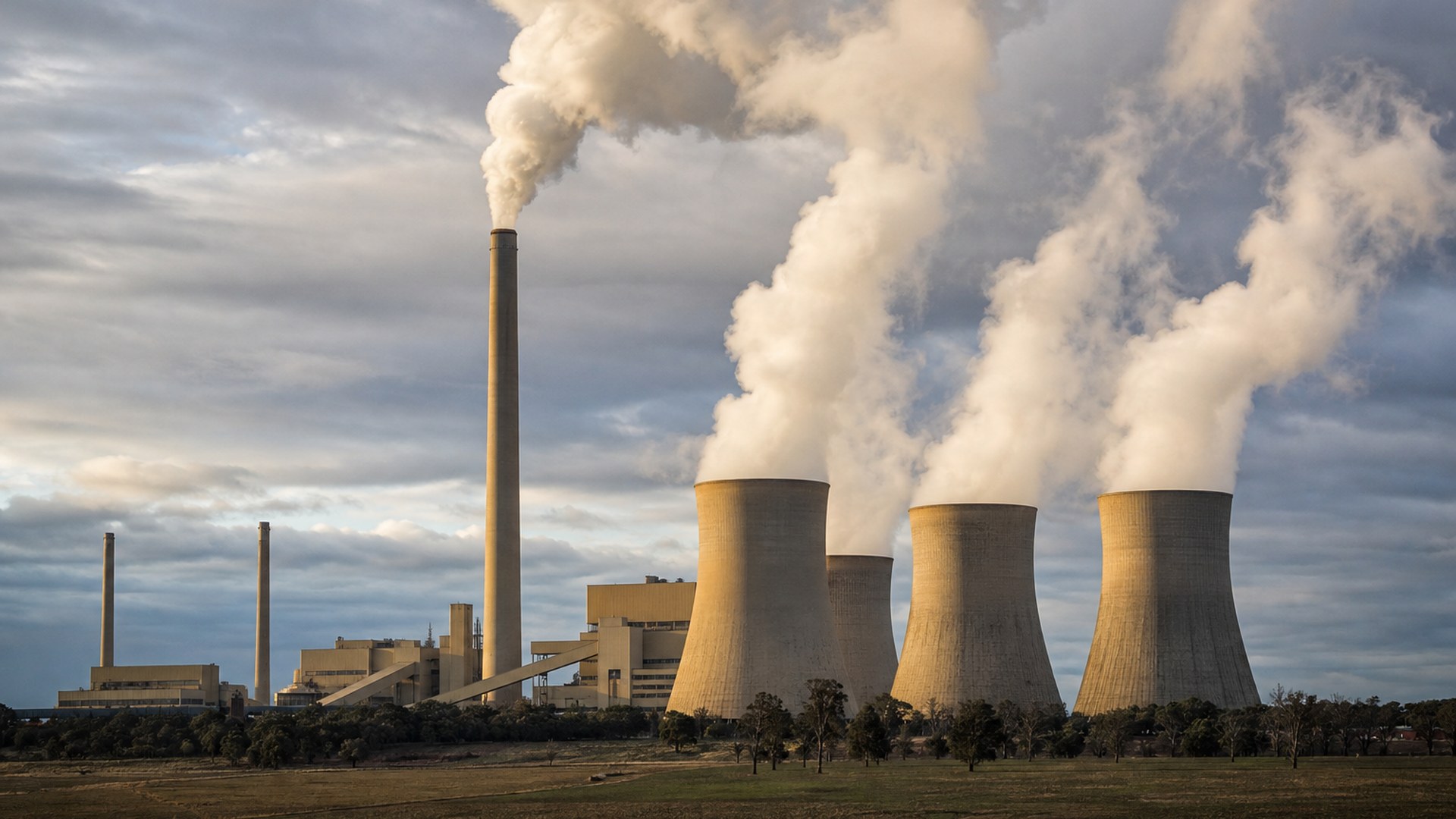
Callum Godde filed the AAP copy the Canberra Times ran at 2:52 p.m. on 31 August. ABC’s Jarrod Whittaker and Madeleine Stuchbery had the same morning from Gippsland, updated 1:35 p.m. Tuesday 1 September. Both desks put Hanson and Pickering in the valley east of Melbourne. The AAP photograph, Joel Carrett, is Hanson in front of Loy Yang A after the launch at Miners Lookout. I'm on the Monday policy, told as lights and a date.
Loy Yang A is one of three brown-coal stations still running in Victoria after Hazelwood shut in 2017. Loy Yang B’s listed close is 2047. Nearby Yallourn is scheduled to close in mid-2028. Pickering said Yallourn had “significantly deteriorated” and “might be too far gone” to save. That’s the quote. He did not put a dollar figure on saving it, or on keeping Loy Yang A open. Asked about private investment and subsidies, he would not speculate. “Those figures haven’t been discussed just yet,” he said. “The intent would be to encourage the industry, through industry future security, to tip into the capital expenditure required themselves.”
He had not spoken to AGL. Godde recorded that the Pakenham candidate — Pickering is also the state leader — said industry leaders had assured him they were prepared to spend to keep coal stations running. An AGL spokesperson told ABC the company was aware of the announcement and reiterated the 2035 close. Those two sentences sit next to each other. The owner’s calendar has not moved. The party’s calendar, if it wins in November, would try to move it.
What else did they put on the table? Scrap net-zero subsidies. Abolish renewable energy zones in the state’s west and a coastal zone for offshore wind. Lean into gas and brown coal. Repeal Victoria’s Nuclear Activities (Prohibitions) Act 1983. ABC listed the REZs and the offshore-wind zone in the same file as the 2035 pledge. Godde’s AAP copy has the nuclear Act by name. Pickering said Victorians “deserve an opportunity to partake in the future of nuclear technology,” whether “through new technological innovations in thorium nuclear micro-reactor technology or in accordance with our federal policy position to develop a nuclear facility on the eastern seaboard with Victoria being a beneficiary.” He also said a national nuclear ban would be another hurdle. That’s the federal lock sitting on the state key.
Hanson used her first National Press Club address in June to call for nuclear on the national grid. On Monday she said reactors “need to happen.” “I’d suggest a couple across the country on the east coast by all means,” she said. “But you need that diversity of power.” Diversity, on her terms, is coal, gas, and nuclear in the same sentence as the lookout. Those are the words as she said them. Not a campaign poster.
Victorian Energy and Resources Minister Jaclyn Symes answered on nuclear. ABC printed her opposing. “Toxic nuclear power will cost hundreds of billions of dollars, will take decades to build and only push up energy prices,” she said. “Farmers, and all Victorians are right to ask where this nuclear power plant will go, and where the toxic waste will go.” She said reversing Victoria’s moratorium showed “what is at risk for every Victorian.” Labor is seeking a fourth term. Ben Carroll replaced Jacinta Allan as premier in late July. Parliament of Victoria’s page puts the election on Saturday 28 November, writs on Tuesday 3 November.
Tony Wood, Grattan Institute energy program director, told ABC the suite could bring “huge implications,” including reliability risk and higher prices. “We know that the coal-fired power stations are aging, like any piece of equipment. As they age, they get less reliable and get more expensive to keep running,” he said. Bruce Mountain, director of Victoria University’s Victoria Energy Policy Centre, said stripping the renewable-energy-zone label “might not have much impact.” “Those REZ zones are broad labels that the government department attaches to things,” he said. Both men stay on the page as named reaction, not as the lede.
Why does the lookout matter? Because the station under it still makes about 30 percent of the state’s power. AGL’s page says the mine contributes to about 50 percent of Victoria’s electricity when you count Loy Yang A and Loy Yang B on the same coal. About 900 people keep the AGL site running. 2,210 megawatts is not a slogan. It is a nameplate. Pickering’s Monday promise is to keep that nameplate past 2035. AGL’s Monday answer is that 2035 still stands. You can hold both facts without turning the valley into a pamphlet.
The Resolve Political Monitor, published mid-August, is the poll AAP put under the launch. One Nation’s Victorian primary was 23 percent, up one. Labor was 25 percent. The Coalition, under Jess Wilson, held at 27 percent. The Conversation, working from the same Resolve for The Age, dated the fieldwork 9–15 August, sample 1,000, and added Greens 12 percent, independents 7 percent, others 6 percent. I'm using 23, 25, and 27 as the three-way the Canberra Times printed. A party at 23 percent, two points behind Labor and four behind the Coalition, is not a footnote over a 2,210-megawatt station.
ABC named Narracan candidate Ben Lucas at the station with Hanson. AAP’s Miners Lookout photograph also puts Greg Hansford, the Eastern Victoria Region candidate, in the frame. Gippsland is about 165 kilometres east of Melbourne on AGL’s geography. The mine, AGL says, is Australia’s largest brown-coal pit: 3,600 tonnes of coal and 2,500 cubic metres of overburden an hour.
Energy as lights is a simple test. Does the station still run. Who says it should. What is the number on the door. Loy Yang A’s number is 2,210 megawatts and about 30 percent of Victoria. One Nation put a keep-open on that number. AGL left 2035 in place. Pickering had not called the owner. The figures, he said, had not been discussed just yet.
Hanson. Pickering. Miners Lookout. Loy Yang A. 31 August 2026. 2,210 megawatts. About two million homes. About 30 percent of the state. About 900 people on the AGL site. Close listed 2035. Yallourn mid-2028, “too far gone.” Loy Yang B 2047. Hazelwood 2017. Repeal the 1983 Act. Scrap net-zero subsidies. Abolish the western REZs and the coastal offshore-wind zone. Resolve mid-August: 23, 25, 27. Election 28 November. The lights are the story. The lookout was where they said it.
The paper
Comments
No notes on this story yet.
Sign in to comment