
B1063 sat down. Starlink Group 15-23 left Space Launch Complex 4-East at Vandenberg at 1:42 a.m. Pacific on Wednesday, 2 September, and the first stage came back to Of Course I Still Love You eight minutes and twenty-four seconds later on SpaceX's own clock.
I'm not writing a preview this morning. SpaceX posted the flown result. Spaceflight Now posted it. Mike Wall posted it for Space.com. Twenty-seven Starlink V2 Mini satellites. Thirty-fifth flight for booster B1063. Two shy of B1067's thirty-seven, the reuse record that booster set on 25 August from Pad 40 in Florida. The West Coast flew the dishes. The booster is on the ship.
You had a short file on this desk before T-0 that said the landing was a target, not a fact. That copy closed overnight. This is the flown one. SpaceX's mission page, spacex.com/launches/sl-15-23, put the work in the past tense: Falcon 9 launched 27 Starlink satellites to low-Earth orbit from SLC-4E at 1:42 a.m. PT. "Following stage separation, the first stage landed on the Of Course I Still Love You droneship, which was stationed in the Pacific Ocean." That's the company sentence. I'm using it.
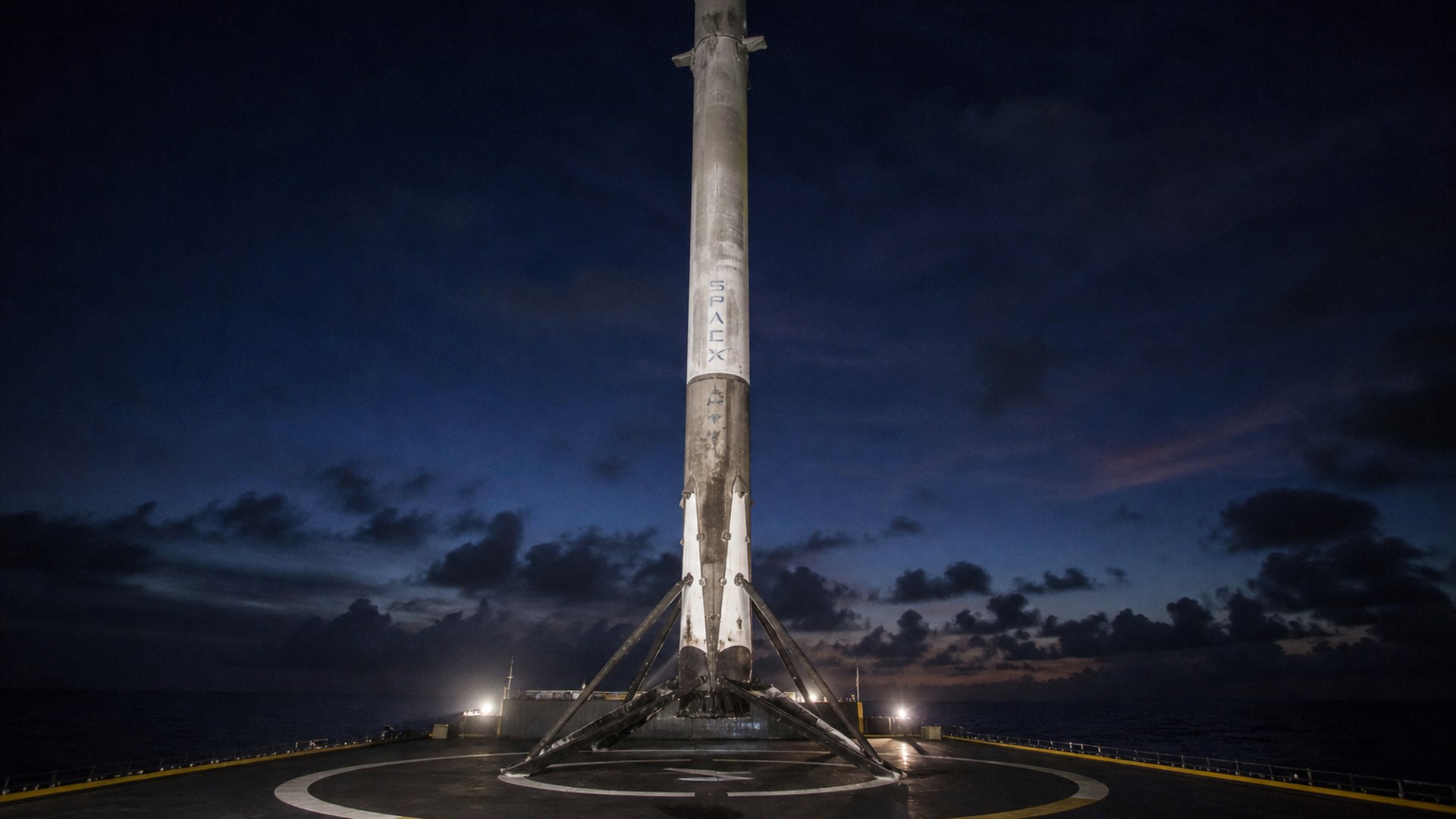
Will Robinson-Smith's overnight preview on Spaceflight Now had put liftoff at 1:42 a.m. Pacific, 08:42 UTC, delayed from Monday the 1st. Steven Young's result page, posted under the same URL on 2 September, kept that clock and changed the tense. Liftoff from Vandenberg Space Force Base at 1:42 a.m. PDT, which is 4:42 a.m. EDT and 0842 UTC. South-easterly off Space Launch Complex 4-East. B1063 on its 35th. After second-stage separation the booster landed on Of Course I Still Love You, stationed in the Pacific off the coast of Baja California. SpaceX confirmed deployment of the 27 Starlink V2 Mini satellites from the upper stage just over an hour into flight.
Mike Wall, Space.com, 2 September, same morning: Vandenberg at 4:42 a.m. EDT, 0842 GMT, 1:42 a.m. local California time. "It was the 35th flight for this Falcon 9's first stage, which is known as Booster 1063. That's just two shy of the SpaceX reuse record, which was set by B1067 last week." Then the landing line: "And B1063 will almost certainly fly again: It came back to Earth successfully today, landing in the Pacific Ocean on the SpaceX drone ship 'Of Course I Still Love You' about 8.5 minutes after launch." Upper stage: 27 Starlink satellites into low Earth orbit 62 minutes after launch.
Next Spaceflight logged Launch Success, T-0 08:42:12 GMT, Wednesday 2 September. Space Launch Live tagged the same stack 100 percent success, B1063 flight 35, 35 of 35 landings, 28-day turnaround from 4 August. Space Launch Schedule, updated 9:52 a.m. UTC the same morning: "The Falcon 9 first stage B1063 has landed on ASDS OCISLY after its 35th flight." Four desks. One sit-down. I'm not stretching it.
Want the minutes, not the adjectives? SpaceX printed a table. All times approximate. Max Q, the moment of peak mechanical stress on the rocket, at T+1:08. First-stage main-engine cutoff at T+2:25. First and second stages separate at T+2:29. Second-stage engine starts at T+2:36. Fairing gone at T+2:57. First-stage entry burn T+6:01 to T+6:25. Landing burn begins T+8:01. First-stage landing T+8:24. Second-stage engine cutoff, SECO-1, at T+8:38. That's the eight-minute return. The upper stage keeps working.
Second-stage engine starts again at T+53:12. Cuts off a second later, T+53:13. Starlink satellites deploy at T+1:02:04. Space.com's 62 minutes is that line in round numbers. Spaceflight Now's "just over an hour" is the same line in English. The company clock is the one I'm keeping on the page: one hour, two minutes, four seconds. Twenty-seven spacecraft off the second stage. The booster is already on the deck by then. It has been for fifty-four minutes.
The countdown on the same page is the pad sequence, not a drama. SpaceX Launch Director verifies go for propellant load at T-38:00. RP-1, rocket-grade kerosene, starts at T-35:00 with first-stage liquid oxygen. Second-stage LOX at T-16:00. Engine chill at T-7:00. Final prelaunch checks and tank pressurisation at T-1:00. Launch Director verifies go for launch at T-45 seconds. Engine controller commands ignition at T-3 seconds. Liftoff at T-0. That's a Falcon 9 night at 4E. It ran.
SpaceX also put a ground note on the page for the three counties that sit under a west-coast return: "There was a possibility that residents of Santa Barbara, San Luis Obispo, and Ventura counties may have heard one or more sonic booms during the launch, but what residents experienced depended on weather and other conditions." Possibility. Weather. I'm not going to tell you what a kitchen in Lompoc heard. The company didn't.
Now the year-count, because two desks used different integers and both are on this story. Mike Wall: 102nd Falcon 9 flight of 2026, 79 of them dedicated to Starlink. Spaceflight Now: the company's 104th orbital launch of the year, and the 79th Starlink mission in 2026. Next Spaceflight: 102nd Falcon 9 mission of 2026, 685th Falcon 9 overall, 106th SpaceX mission of 2026, 716th SpaceX overall. Read those as labelled. Don't mash them into one number and pretend the desks agree.
Wall did the arithmetic in the same piece. SpaceX has launched four other times in 2026 besides the Falcon 9 pile: two Falcon Heavy missions and two suborbital test flights of Starship. The second Falcon Heavy of the year was Sunday, 30 August, NASA's Nancy Grace Roman Space Telescope off Launch Complex 39A. Liora Hale has that file on this paper. Add Wall's 102 Falcon 9 flights to the two Heavies and you get 104 orbital launches. That is Spaceflight Now's 104. Add the two suborbital Starships and you get Next Spaceflight's 106th SpaceX mission of 2026. Three clocks. Same morning. They fit if you keep the labels on.
The 79 Starlink missions are the shared integer. Space.com and Spaceflight Now both used it. Wall said 79 of the 102 Falcon 9 flights were dedicated to building out the constellation. Young said 79th Starlink mission in 2026. That's the dish cadence. Wednesday was one more crate in that count, from California, not Florida.
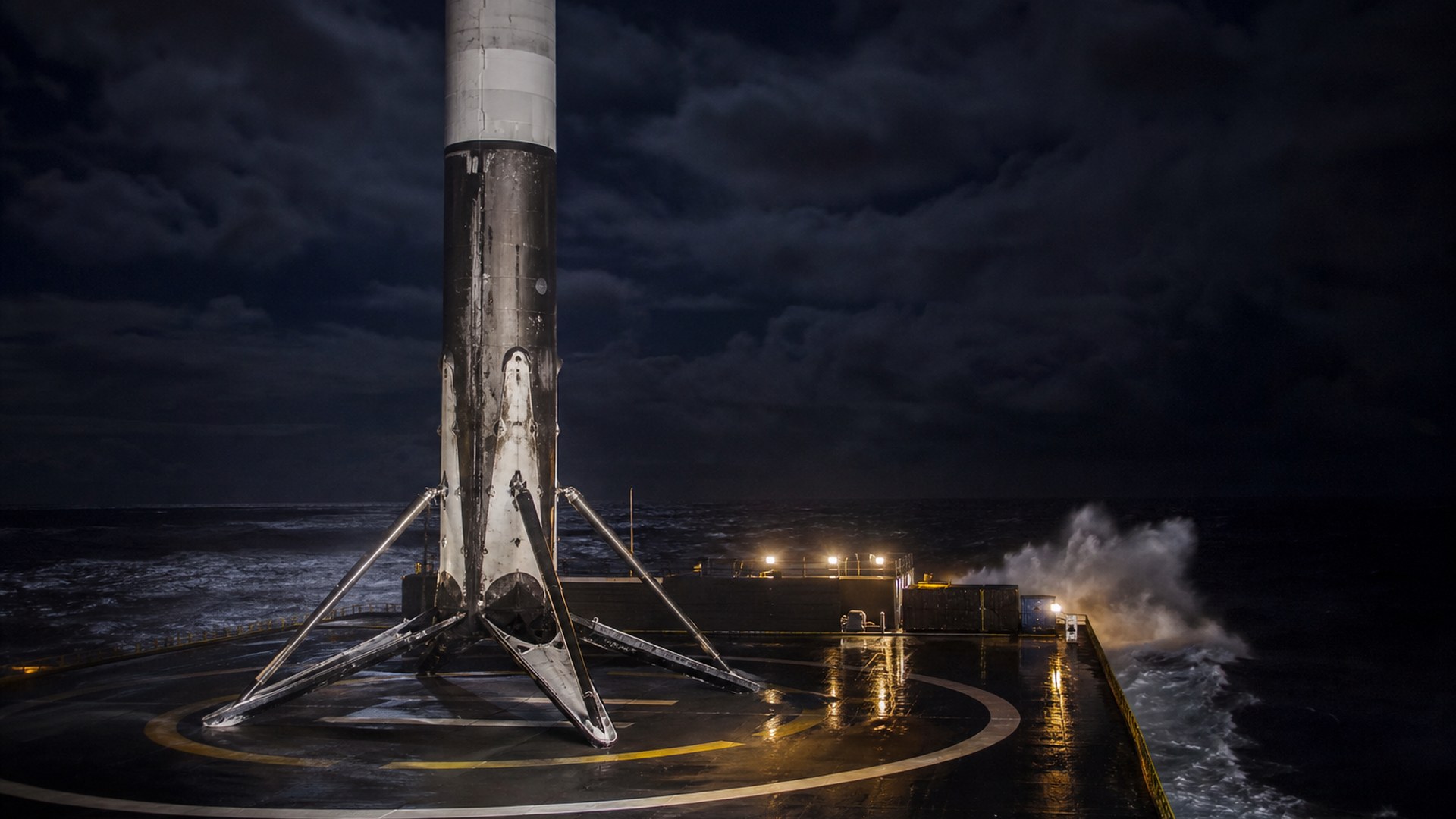
B1063 is a Vandenberg booster with a NASA childhood. SpaceX's own 15-23 page listed the card in one sentence: "This was the 35th flight for the first stage booster supporting this mission, which previously launched Sentinel-6 Michael Freilich, DART, Transporter-7, Iridium OneWeb, SDA-0B, NROL-113, NROL-167, NROL-149, NAOS, and now 26 Starlink missions." That's the company heritage list. I'm not adding a mission the page didn't name.
First flight is on the public record. Saturday, 21 November 2020, 9:17 a.m. PST, Space Launch Complex 4E at what was then Vandenberg Air Force Base. Sentinel-6 Michael Freilich, the NASA/ESA sea-level satellite. SpaceX's Sentinel-6 mission page: following stage separation the first stage returned to Landing Zone 4 at the base. Spacecraft deployed about 58 minutes after liftoff. Spaceflight Now's Stephen Clark, same day, put the clock at 9:17:08 a.m. PST, 1717:08 GMT, from SLC-4-East, about 225 kilometres northwest of Los Angeles, on a 70-metre Falcon 9 flying south-southeast. A west-coast core from the first outing. It landed on land that morning. Wednesday it landed on water.
DART is the second named NASA flight on the company list. NASA's own launch note: a Falcon 9 left Space Launch Complex 4 at Vandenberg on 23 November 2021 at 10:21 p.m. PST, which is 1:21 a.m. on the 24th Eastern, carrying the Double Asteroid Redirection Test spacecraft. Vandenberg Space Force Base's Michael Peterson captioned the same T-0 from SLC-4. NASASpaceflight, filing that night, called it the third flight of B1063 — Sentinel-6, then a Starlink from Cape Canaveral, then DART back at 4E. SpaceX's 2026 mission page doesn't reprint the Cape detour. It does keep DART on the list. After that the tail number becomes a Starlink tool with a handful of national-security and rideshare jobs in between: Transporter-7, Iridium OneWeb, SDA-0B, three NROLs, NAOS, and the 26 Starlink batches that SpaceX counted through Wednesday morning.
Space Launch Live put first flight at 21 November 2020 and the previous flight at 4 August 2026, a 28-day turnaround. Next Spaceflight had 29 days on the same booster card. Four weeks, give or take a day. I'm not picking a winner between 28 and 29. Both desks are counting from the same August outing. That is a working core, not a museum piece rolled out for a camera. Thirty-five flights in five years and ten months if you start the clock at Sentinel-6. The record holder, B1067, entered service in June 2021 and hit 37 on 25 August. Different first-flight dates. Same Block 5 family.
Next Spaceflight's recovery line on 15-23 is a fleet statistic, not a booster biography. 675th Falcon recovery attempt. 661st successful recovery. 243rd consecutive successful recovery. 317th consecutive successful landing. Those are running totals on the Falcon landing programme as that desk had them for this mission. Spaceflight Now, on the 26 August Vandenberg flight, had called B1082's sit-down the 221st landing on Of Course I Still Love You and the 655th Falcon booster landing to date. A week later the Pacific ship took another one. I'm not going to invent Wednesday's vessel-count from last week's 221. Spaceflight Now did not print a 222 on the 15-23 result page that I can quote. The ship is the same. The booster is different. The landing happened.
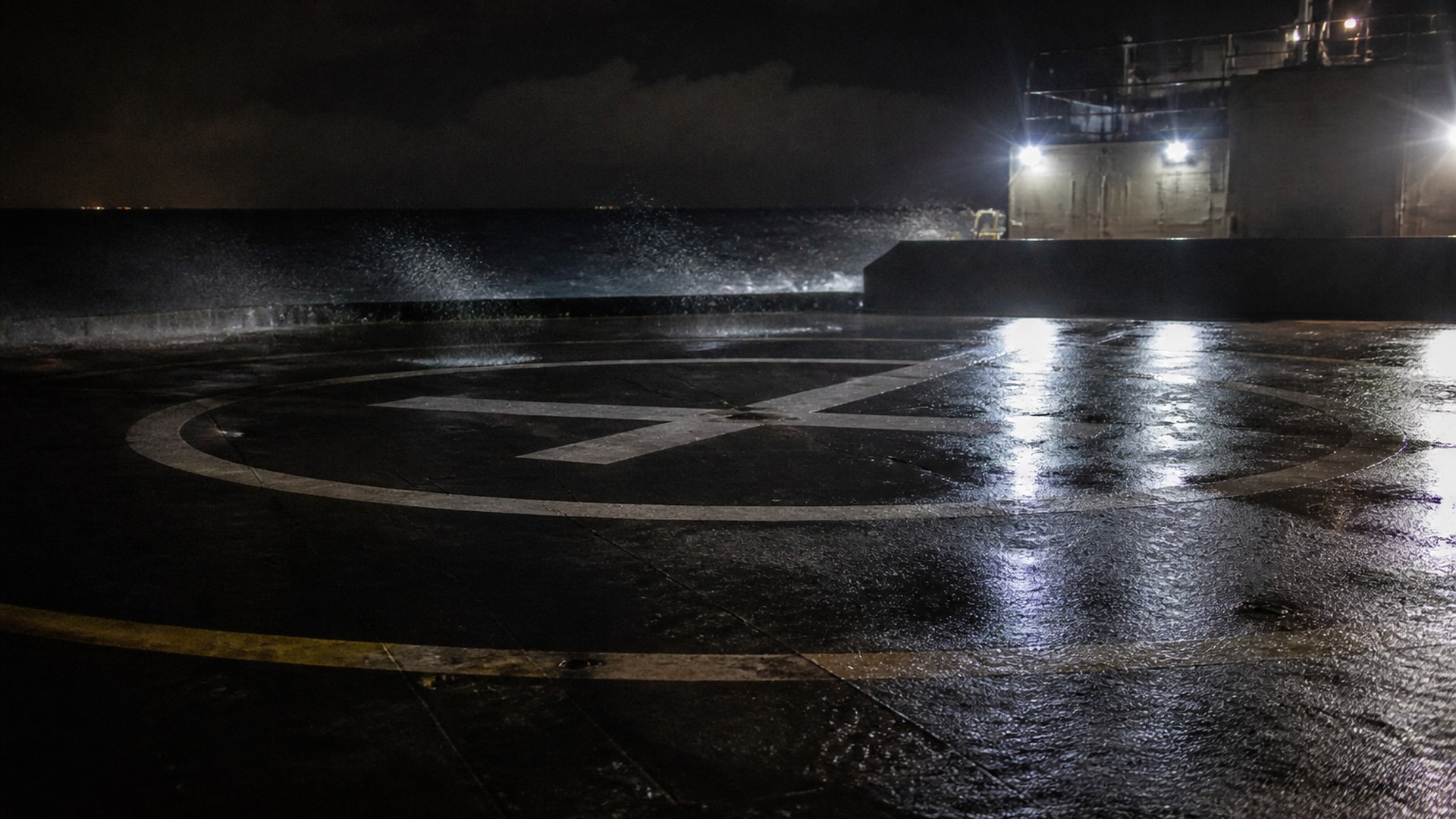
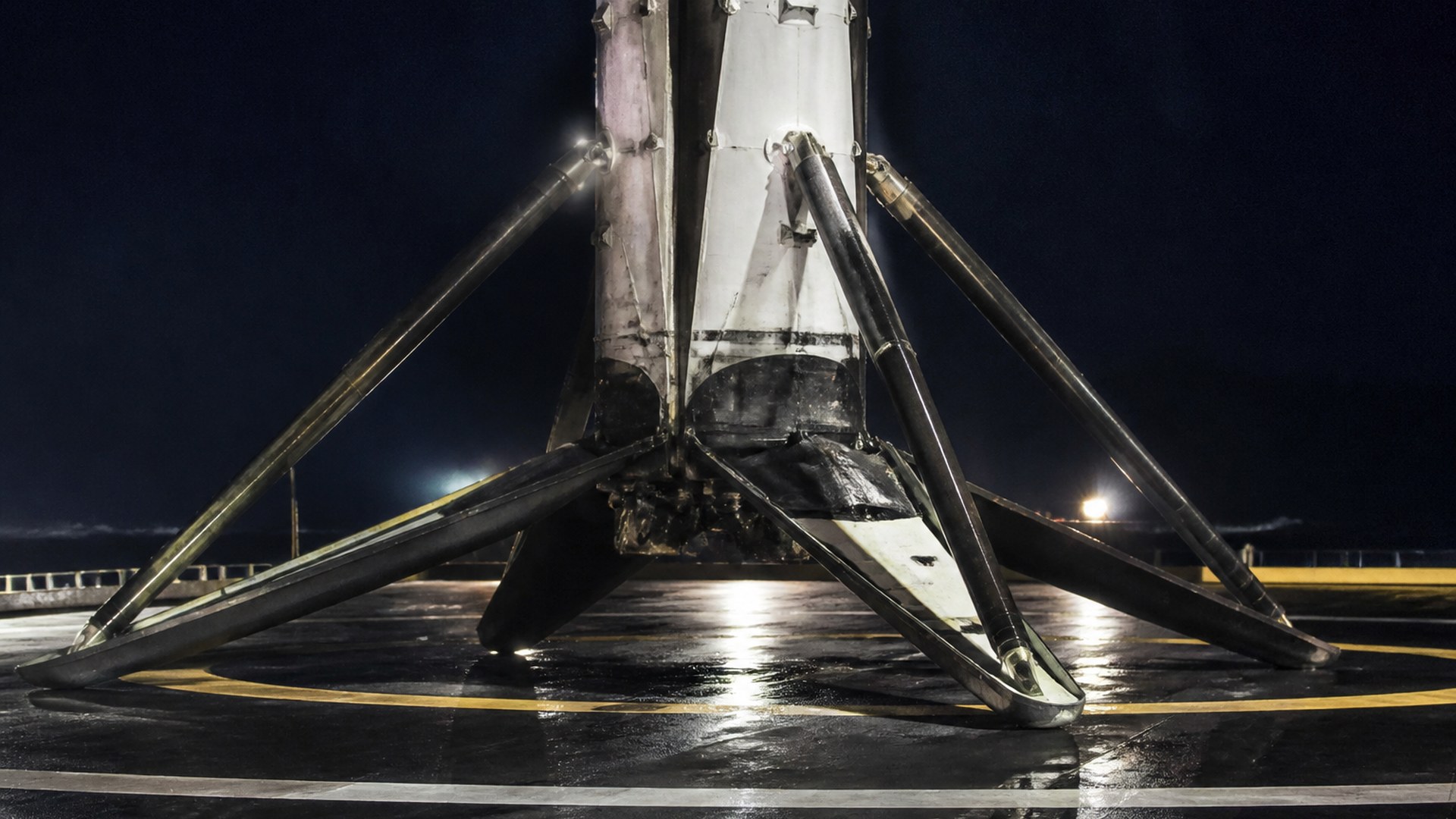
Of Course I Still Love You is the Pacific recovery ship. Culture name. Painted deck. Spaceflight Now stationed it off Baja California for the south-easterly Vandenberg track. Space Launch Schedule's vessel note, which Wren Solace already used on the webcast file, is the history, not Wednesday's weather: second autonomous spaceport droneship, West Coast water in this era, and the site of SpaceX's first Falcon 9 first-stage landing, CRS-8. A first stage that is asked to come home at sea does it on legs. Four of them. That's the machine. I did not stand on that deck. The stills on this page are booster, pad, fairing, ship. No faces.
Why is the ship in the Pacific instead of the Atlantic this week? Because the trajectory is a Vandenberg south-east, and because Florida has stopped putting Falcon 9 Starlink stacks on the Cape pads. That's not a vibe. That's Kiko Dontchev, SpaceX vice president of launch, on 25 August, the morning B1067 flew its 37th from Space Launch Complex 40.
Tuesday, 25 August, 5:33 a.m. Eastern. Starlink 10-49. Twenty-nine Starlink satellites. B1067, fleet leader, 37th flight. SpaceX's own mission page said so. Landing on A Shortfall of Gravitas in the Atlantic, about 8.5 minutes after liftoff. Upper stage deploy about 61.5 minutes on Space.com's clock. Space.com called it the 100th Falcon 9 launch of 2026 and the record 37th for that booster. Spaceflight Now's Will Robinson-Smith: 5:33 a.m. EDT, 0933 UTC, north-easterly off Pad 40. "SpaceX's flight-leading booster, tail number B1067, made its 37th mission after entering service in June 2021." Nearly 8.5 minutes later it landed on A Shortfall of Gravitas. Robinson-Smith: 165th landing on that vessel, 654th Falcon booster landing to date. Cole Vance filed the pad-40 version on this paper. I'm repeating the record because Wednesday's 35 only means anything next to it.
Dontchev's caption is the policy that put 15-23 at Vandenberg. Aerospace Global News quoted the post: "This morning's SpaceX mission from pad 40 was the last planned Falcon 9 Starlink launch from Florida (and it launched on the fleet-leading booster!!), marking the end of an era for these launches on the East Coast." Next sentence: "From here on, Starlink missions out of Florida will fly on Starship. The West Coast team will continue regularly launching Starlink from Vandenberg." News 13 Orlando had the same two sentences from the X post. Florida Today had them too, and the follow-ups. "Super proud of this incredible team. You've made Falcon 9 the most reliable launch vehicle in history. You also helped build the largest low-Earth orbit satellite constellation providing connectivity to millions around the world, and you've set the foundation for what's next." Then the Cape number: "In the last seven years, Falcon has flown ~260 Starlink missions from the Cape… can't wait until we launch that and many more with Starship!"
Last planned is the phrase that matters. Planned is a schedule word. Pad 40 is not being closed. Crew Dragon, Falcon Heavy, and other customer missions still have Florida on the book. Dontchev is moving the Starlink crate to Starship on the east coast and leaving the Falcon 9 Starlink crate with the West Coast team. Wednesday morning was that sentence, flown. Vandenberg. Falcon 9. Twenty-seven V2 Minis. OCISLY. Not a special. A delayed Tuesday that became a Wednesday, which had already been delayed from Monday.
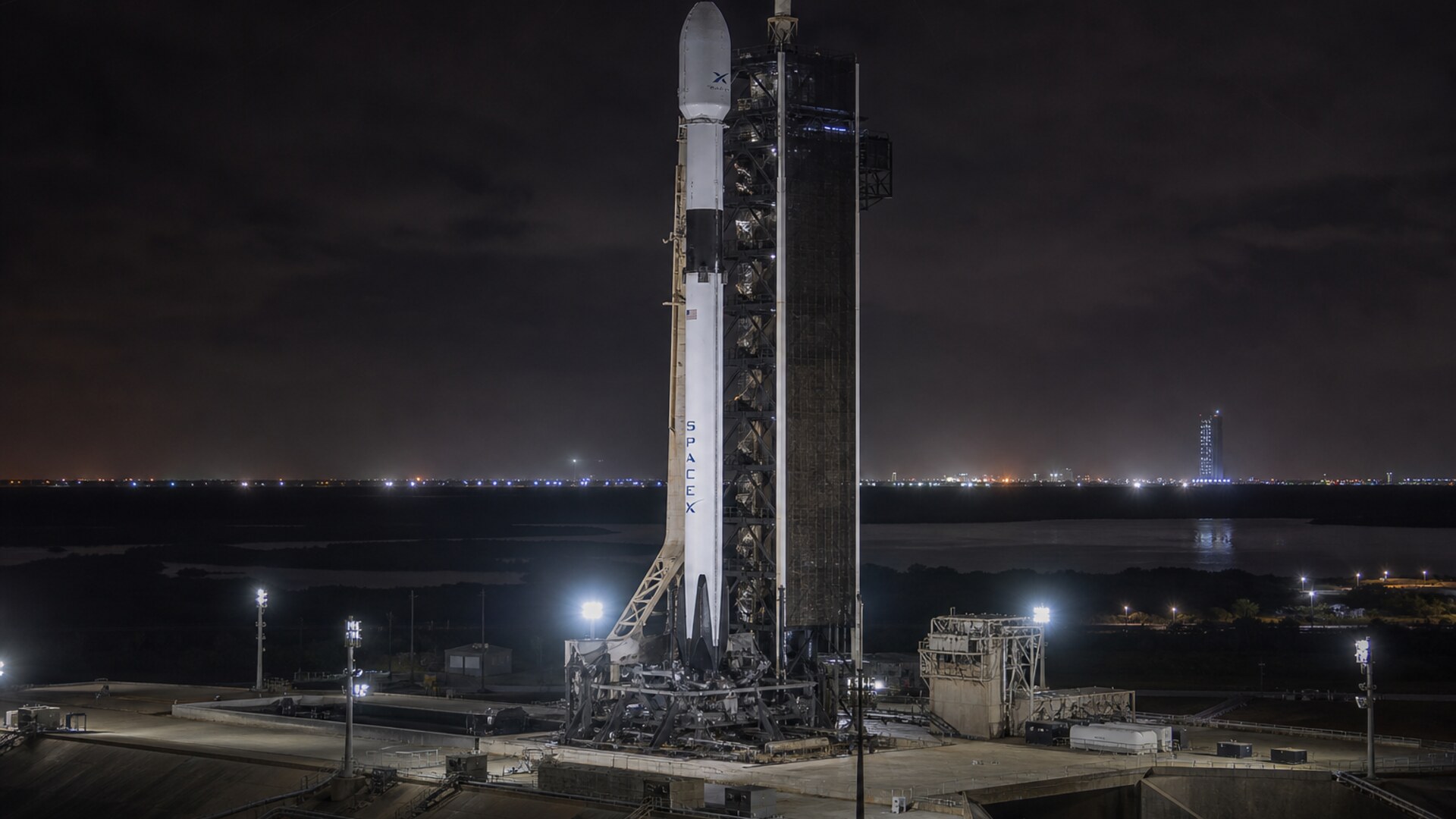
The day after Pad 40's last planned Falcon Starlink, Vandenberg flew Starlink 15-22. That's the stack that makes Wednesday look like traffic instead of a one-off. Spaceflight Now, Will Robinson-Smith, 26 August: Space Launch Complex 4 East at 2:35 a.m. PDT, 5:35 a.m. EDT, 0935 UTC, south-easterly. Booster B1082, 24th flight. Twenty-seven more V2 Minis. Landing on Of Course I Still Love You about 8.5 minutes after liftoff — 221st landing on that vessel, 655th Falcon booster landing to date, on that desk's count. SpaceX had already landed the first stage by 6:15 a.m. EDT, 1015 UTC, in the update line. Robinson-Smith's payload line for the year: "SpaceX has flown more than 2,000 of its Starlink satellites to orbit so far this year."
B1082's card, from the same Spaceflight Now piece: previously NROL-145, USSF-62, OneWeb Launch 20, and 20 batches of Starlink. A west-coast worker, one flight younger in the reuse column than B1063 was on Wednesday. Mike Wall, Space.com, 26 August: 5:35 a.m. EDT, 0935 GMT, 2:35 a.m. local California time. 101st Falcon 9 liftoff of 2026. First stage back about 8.5 minutes later on Of Course I Still Love You. 24th flight for B1082. Upper stage scheduled to deploy 27 satellites 62 minutes after launch. Wall's policy sentence that morning is the one Wednesday sat inside: "Vandenberg will be the only Falcon 9 Starlink site from now on: SpaceX announced yesterday (Aug. 25) that it's pausing Florida Starlink launches until they can be performed by the company's Starship megarocket, which remains in development."
So the week on the two coasts is a short list. 25 August, Pad 40, B1067, 37th, 29 Starlink, A Shortfall of Gravitas, last planned Florida Falcon Starlink. 26 August, Vandenberg 4E, B1082, 24th, 27 V2 Minis, OCISLY, 101st Falcon 9 of the year on Wall's clock. 30 August, 39A, Falcon Heavy, Roman, Liora's file. 2 September, Vandenberg 4E, B1063, 35th, 27 V2 Minis, OCISLY, 102nd Falcon 9 of the year on Wall's clock. You don't need a metaphor. You need the dates.
The rocket is still a Falcon 9 Block 5. Next Spaceflight's vehicle card on this mission: 70 metres tall, 3.7-metre first-stage diameter, two stages, liftoff thrust 7,607 kilonewtons. Fairing 5.2 metres across and 13 metres tall. Payload to low Earth orbit on that card, 22,800 kilograms; to geosynchronous transfer orbit, 8,300 kilograms. Those are catalogue figures for the vehicle class, not a weighed crate for 15-23. The payload on Wednesday was 27 second-generation mini satellites for the same low-Earth-orbit broadband constellation SpaceX has been stacking all year. Group 15-23. The group number is the plane. The 27 is the crate.
Wall put the constellation at more than 11,000 active spacecraft, citing Jonathan McDowell's planet4589 Starlink stats page. Spaceflight Now, on the 25 August Florida flight, had the same floor: more than 11,000 spacecraft in the low Earth orbit constellation. KeepTrack's 30 August public census, which I used on the Booster 21 static-fire file, had 12,881 launched, 11,102 in orbit, 11,087 operational. Three numbers, one network, a few days older than Wednesday. I'm not going to pretend I counted the birds on the 2nd. McDowell's "more than 11,000 active" is the figure Space.com hung on this launch. Robinson-Smith's "more than 2,000" Starlink satellites flown in 2026 is the year's crate count as of 15-22. Add 27 on the 26th and 27 on the 2nd and you are still in the same sentence: this year is a conveyor, and Vandenberg is now the Falcon 9 end of it.
Two shy of the record is a ledger gap, not a race I'm going to narrate. B1067 is on 37. B1063 is on 35. Space.com, on 25 August, had six Falcon 9 boosters with at least 30 flights: B1067 then on 36 going to 37 that morning, B1071 on 35, B1063 on 34, B1069 on 32, B1077 and B1078 on 30. Wednesday moved B1063 from 34 to 35. I do not have a flown number for B1071 after 25 August that I can put on this page without guessing, so I won't. The point of Wall's list was the bench. Six cores at 30-plus. The record is 37. The West Coast just put another core on 35 and landed it. That's the reuse programme as a traffic list, not as a trophy photo.
B1067's own heritage, from SpaceX's 10-49 mission page, is the east-coast twin of B1063's NASA-and-Starlink card: CRS-22, Crew-3, Turksat 5B, Crew-4, CRS-25, Eutelsat HOTBIRD 13G, SES O3B mPOWER-A, PSN SATRIA, Telkomsat Merah Putih 2, Galileo, Koreasat-6A, and 26 Starlink missions as of 25 August. Crew and cargo sit on that list next to the constellation. B1063's list is Sentinel-6, DART, rideshares, NROLs, NAOS, and 26 Starlink missions as of 2 September. Different customers. Same Block 5. Both cores came home on a barge. One set a record from Florida. The other is two flights behind it from California. Cole Vance already wrote the Florida half. This page is the California half, a week later, on a different ship, with a different tail number, and a landing that is no longer a target.
What about Florida now that the Falcon Starlink work has moved west? Dontchev did not retire Pad 40. He moved a payload class. Crew-13 is still a Florida Falcon job on this paper's Cole Vance file — NASA slipped it after a Dragon oxidizer leak, with a September target that had already moved. Falcon Heavy just flew Roman from 39A on 30 August. Starship remains in development. Harper Quinn's other late-August file on this desk is Booster 21's full-duration 33-engine static fire at Starbase on 28 August for Flight 14, with mid-September as the talk, not a countdown. East Coast Starlink on Starship is the policy. It is not a flown Florida Starship on this page. Dontchev did not offer a date. News 13 said so. I'm not inventing one.
The next crate on the Vandenberg list is already typed. Spaceflight Now's launch schedule: 6 September, Falcon 9, Starlink 15-24. Window opens at 3:59 a.m. PDT, 6:59 a.m. EDT, 1059 UTC, from SLC-4E. Another 27 Starlink V2 Mini satellites to low Earth orbit. Booster B1088 on its 19th, scheduled to land on Of Course I Still Love You in the Pacific. Delayed from 4 and 5 September. Next Spaceflight has the same T-0 at 10:59 GMT Sunday 6 September, window close 14:59, B1088 flight 19, 21-day turnaround, same droneship. Space Launch Live had the stack GO. That's the traffic list as of this morning. Launch times slip. Range, weather, a hold. I'm filing 15-24 as a schedule line, not as a flown result. Wednesday is the flown result.
The clock on this one moved before it flew, which is why the overnight file had two UTC times on it. Spaceflight Now's 1 September preview put T-0 at 1:42 a.m. Pacific, 08:42 UTC. The same desk's launch-schedule page, updated 1 September, later listed 1:18 a.m. Pacific, 08:14 UTC. Next Spaceflight held 08:42:12 GMT. Rocket Launch Live, on the pre-flight pass, had 08:18 UTC and a result field that was not set. Wednesday's flown time is the preview clock, not the slipped one: 1:42 a.m. PDT, 0842 UTC, 08:42:12 on Next Spaceflight. Delayed from 1 September, then flown on the 2nd at the time the preview had printed. Launch times slip. This one slipped a day and then held the minute.
The public tape is the company webcast. SpaceX's mission page is the official door. Wren Solace's overnight file on this paper already logged the other rooms: Spaceflight Now's Steven Young preview promised that desk's own live coverage starting 30 minutes prior; NASASpaceflight titled a stream SpaceX Launches Falcon 9 Starlink 15-23 from Vandenberg; Space Affairs ran GO! — SpaceX — Falcon 9 — Starlink 15-23 — SLC-4E. I'm not recutting the tape here. Harper Quinn's job this morning is the ledger: tail number, T-0, landing, deploy, two shy. If you want landing burn and deck from the cameras, the webcast file is still up. This page is the flown result those cameras were pointed at.
Falcon 9 Block 5 has been the flying version since 2018 on Next Spaceflight's vehicle card. Price on that card is 74 million dollars, a catalogue figure I'm not going to treat as Wednesday's invoice. Active since 2018 is the date that matters for reuse: the cores that are now in the thirties were not a 2026 surprise. They are Block 5 cores that have been landing and flying again for years, and the record just moved from 36 to 37 last week. B1063 is one of those cores. First flight November 2020. Thirty-fifth flight September 2026. Landing 35 of 35 on Space Launch Live's card. That's a clean recovery column. I'm repeating it because a 35th flight with a miss would be a different story, and this is not that story.
Group 15 is the west-coast Starlink plane in the numbering you can see on the schedule. 15-22 on 26 August. 15-23 on 2 September. 15-24 on 6 September. Same pad, same class of payload, same droneship on the current book. Twenty-seven V2 Minis each. Florida's last Falcon Starlink, 10-49, was 29. The west-coast crate right now is 27. I don't have a company essay on why 27 rather than 29 for these groups, so I'm not writing one. The manifests are the file: 27, 27, 27 on 15-22, 15-23, 15-24. Wednesday's 27 are the ones that left the second stage at T+1:02:04.
Pad 4E sits on Vandenberg Space Force Base in Santa Barbara County, California. Space Launch Delta 30 is the unit on the base. SpaceX has been flying Starlink south-east off that concrete for years. Next Spaceflight's pad card still prints a fastest Vandenberg turnaround of 2 days 7 hours. That is a site statistic, not Wednesday's 28-or-29-day rest for B1063. The base can turn a different core faster than it turned this one. Wednesday's stack used the core that had the 35th on the side. The droneship was on station. The satellites came off at T+1:02:04. The landing burn started at T+8:01. The legs were down at T+8:24.
I opened the overnight file by saying I would not write the landing as fact until Spaceflight Now, SpaceX, or Next Spaceflight posted it. They posted it. Space.com posted it. Space Launch Live posted it. Space Launch Schedule posted it. The target was the ship. The outcome is this line: B1063 flew its thirty-fifth, landed on Of Course I Still Love You, and sits two flights shy of the record B1067 set from Florida on 25 August. Vandenberg is the Falcon 9 Starlink pad while the Cape builds the Starship foundation Dontchev talked about. Twenty-seven more V2 Minis are in orbit. The booster is on the deck. That's the West Coast morning.
The paper
Comments
No notes on this story yet.
Sign in to comment